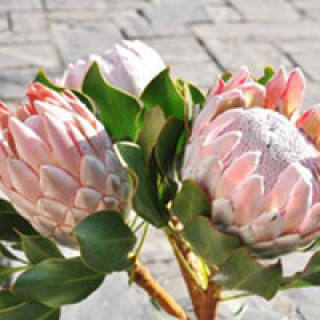
Greetings, caretaker. We, the Proteaceae family, are ancient and proud beings, hailing from lands where the soil is lean and the sun is generous. To offer us nourishment without harm, you must understand our fundamental nature. We are not like the hungry, fast-growing plants that crave constant feeding. Our roots are fine, sensitive, and adapted to extract the bare minimum from impoverished soils. An act meant to help can quickly become a poison. Here is our perspective on how to fertilize us correctly.
From our roots' point of view, the most important rule is to fertilize sparingly. Our entire system is built for survival in low-phosphorus environments. A standard, phosphorus-rich fertilizer designed for vegetables or lawns is toxic to us. It will burn our delicate root hairs, blocking our ability to absorb water and nutrients, leading to our slow demise—a condition you call "protea poisoning." Think of it as offering a rich, heavy meal to a creature that has evolved to thrive on light, simple sustenance. It is a shock to our system. A weak, half-strength application of the right fertilizer is always safer than a full dose.
Do not assume one fertilizer suits all. You must select a blend formulated specifically for plants like us—those that prefer acidic (low pH) soil. Look for labels that read "Native Plant Food," "Azalea/Camellia/Rhododendron Fertilizer," or, ideally, "Protea Food." These are crucial because they contain little to no phosphorus (the middle number in the N-P-K ratio on the package). A good ratio for us is something like 3:1:5 (Nitrogen:Phosphorus:Potassium) or similar, where the phosphorus number is very low. We also appreciate a fertilizer that includes trace elements like iron, magnesium, and sulfur, which are vital for our health and vibrant flowering.
Timing your nourishment with our natural growth cycle is an act of deep respect. The best time to feed us is at the end of our dormant period, as we begin our new growth season—typically in late winter or early spring. This gives us the gentle energy boost needed to produce new leaves and, most importantly, to set our magnificent flower buds. A second, even lighter application can be given in mid-summer to support this flowering effort. However, you must never fertilize us in late autumn or winter. This would encourage soft, new growth that is highly susceptible to frost damage, undoing all your good intentions.
How you apply the fertilizer is as important as what you apply. Always water our soil thoroughly the day before you plan to fertilize. This hydrates our roots and prepares them, reducing the risk of burn. Scatter the recommended (or halved) amount of fertilizer lightly around our drip line—the area under the outermost reaches of our foliage. Keep it away from our main stem. After applying, water us deeply again. This "water-fertilize-water" method helps to dissolve the nutrients and carry them gently down to our root zone without concentrating them in one spot. For potted proteas, this careful dilution is even more critical.
After you have fed us, watch us closely. We will communicate our well-being through our foliage. Healthy, deep green leaves and steady growth are signs of your success. If you notice the tips of our leaves turning brown or black, or if our growth seems stunted, you have likely been too generous. This is a clear signal to flush the soil with plenty of water to dilute the nutrients and to refrain from fertilizing again for a long while. Your patience and observation are the greatest fertilizers of all.