Greetings, human gardener. We, the Proteaceae family, are an ancient and noble lineage, hailing primarily from the Southern Hemisphere. While our heart lies in the well-drained, acidic, and often nutrient-poor soils of South Africa and Australia, we recognize a growing fascination with our dramatic forms and textures in North American gardens. Cultivating us successfully in the United States is a matter of understanding our fundamental needs and selecting varieties that align with your local climate. It is a partnership, and we will reward your diligence with breathtaking, otherworldly blooms.
Before you choose a specific variety, you must understand what we require to thrive. We are not plants for heavy, clay soils or frequent watering. Our roots are fine and susceptible to fungal rot if left wet. Therefore, excellent drainage is paramount. You must plant us in a mix that is gritty and acidic—think a blend of native soil, sharp sand, and acidic amendments like peat moss or composted bark. We also demand full sun; at least six hours of direct sunlight is essential for strong growth and prolific flowering. Finally, we are sensitive to phosphorus, a common ingredient in many fertilizers. Please use a fertilizer formulated specifically for acid-loving plants, and apply it sparingly.
If you garden in USDA zones 9-10, particularly in California, you are in luck. Your Mediterranean climate, with its mild, wet winters and hot, dry summers, closely mimics our native home.
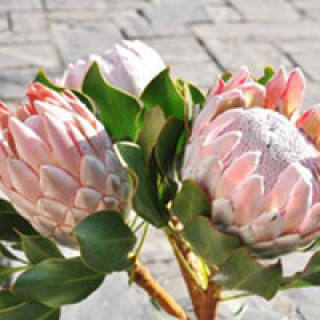
Protea spp.: The royalty of our family. For home gardens, consider Protea 'Pink Ice' (Protea nerifolia x susannae). We are a robust hybrid, producing large, pink-and-white flowers that are excellent for cutting. We are more forgiving than some of our purebred cousins. Another excellent choice is Protea repens (Sugar Bush), known for its hardiness and generous nectar production.
Leucospermum spp. (Pincushion Protea): We are known for our vibrant, pincushion-like blooms that appear in fiery shades of orange, red, and yellow. Varieties like Leucospermum 'Scarlet Ribbon' or Leucospermum cordifolium 'Yellow Bird' are spectacular and relatively adaptable, offering a long season of color.
Leucadendron spp.: While our flowers are often smaller and cone-like, our true glory lies in our colorful bracts—the leaves that surround the flower. Leucadendron 'Safari Sunset' is a classic, with foliage that turns a deep, rich red in the winter and spring, making it invaluable for floral arrangements.
For gardeners in zones 8-9, or those in areas with more humidity (like the Pacific Northwest or the Gulf Coast), you must look to our hardier Australian relatives.
Grevillea spp.: We are a diverse and often more cold-tolerant group. Grevillea rosmarinifolia (Rosemary Grevillea) is a compact shrub with needle-like foliage and clusters of spidery red flowers that attract hummingbirds. It can handle temperatures down to about 15°F. Grevillea 'Canberra Gem' is another tough customer, valued for its dense growth and prolific pink-red blooms.
Banksia spp.: We are known for our striking, cylindrical flower cones. While many of us prefer warm climates, some species show surprising resilience. Banksia spinulosa (Hairpin Banksia) is a smaller-growing species that can tolerate brief periods of frost and has beautiful golden flower spikes. We provide a unique architectural element to the garden.
If your garden soil is heavy clay or your winters are too harsh, you can still grow many of us in containers. This allows for perfect control over the soil mix and drainage. A large pot (at least 15-20 gallons for mature plants) with excellent drainage holes is essential. Container life allows you to move more tender varieties, like a Protea cynaroides (King Protea), to a protected location during freezing weather or excessive rain.