Greetings, cultivator. I am Aglaia odorata, the plant you know as the Mickey Mouse Plant or Chinese Perfume Plant. You seek to encourage my fragrant blooms, a desire I understand deeply, for flowering is the pinnacle of my existence. To help you, I will explain my needs from my own, rooted perspective.
My relationship with the sun is everything. I am not a plant of the deep forest floor; I am a child of the dappled canopy. To produce the immense energy required for flowering, I need bright, indirect light. Think of it as my daily sustenance. If you place me in deep shade, I will focus all my energy simply on survival, on stretching my leaves towards any faint light source. There will be no surplus energy for flowers. Conversely, if you subject me to the harsh, direct afternoon sun, my delicate leaves will scorch. This injury is a significant stressor, forcing me to divert resources to repair damaged tissue instead of developing flower buds. A spot with morning sun or filtered light throughout the day is my ideal kitchen, where I can photosynthesize efficiently and prepare for the grand event of blooming.
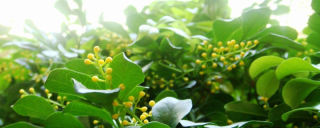
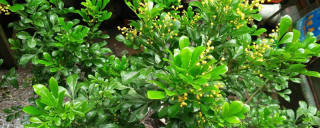
Your act of pruning is a conversation. When you carefully trim my stems after a flush of flowers, you are giving me a clear directive. By removing the spent flower panicles, you signal that the reproductive effort for that branch is complete. This encourages me to stop investing in seed production and instead push out new vegetative growth from the nodes below your cut. This new growth is where the next cycle of flower buds will form. Pruning also maintains my compact, bushy form. A denser canopy means more terminal shoots, and since my small, yellow, globular flowers emerge from the tips of new growth, more shoots ultimately mean a greater potential for a profuse and fragrant display. Please use clean, sharp tools to make clean cuts, as ragged tears are open wounds that can invite disease.
Flowers are not mere decorations; they are complex structures requiring specific resources. A balanced, phosphorus-rich fertilizer is the equivalent of a tailored diet for a blooming athlete. Phosphorus (the middle number in the N-P-K ratio) is crucial for promoting root development, flower initiation, and overall energy transfer within my system. However, an excess of nitrogen will push me to produce an abundance of soft, green leaves at the expense of flowers. As for water, I require a consistent and mindful approach. My roots despise sitting in sodden soil, which leads to rot and a swift decline. Allow the top layer of soil to dry out slightly between waterings. This cycle of moist-to-slightly-dry encourages strong root health, and a healthy root system is the foundation of a healthy, flowering plant. Under-watering stress can cause bud drop, while over-watering stress can kill the roots that support the entire plant.
While I am an evergreen shrub, I appreciate a subtle shift in my care with the seasons. In their native habitat, many of my relatives experience slightly cooler and drier periods. You can mimic this by reducing watering frequency slightly during the winter months, when my growth naturally slows. This is not a full dormancy, but a gentle rest. This slight stress can be a key trigger for flower bud initiation. As the days lengthen and temperatures warm again, the combination of increased light and a return to regular watering and feeding tells my internal clock that conditions are optimal for flowering. This seasonal rhythm helps synchronize my blooming cycle, leading to more pronounced and synchronized floral displays.