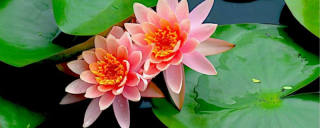
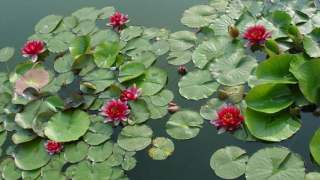
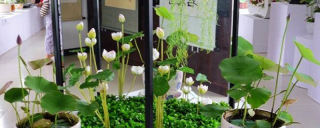
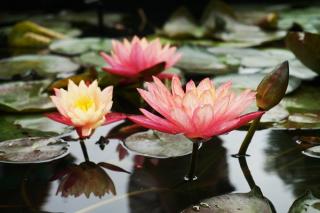
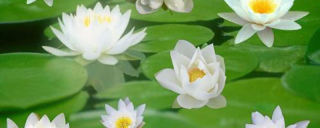
For small ponds and patio containers, the key is to select water lily varieties specifically bred or known for their compact growth habit. These are often classified as "dwarf" or "small" water lilies. Unlike their larger cousins that can spread several feet across, these smaller varieties typically require a surface area of only 3 to 15 square feet. They are characterized by smaller leaves and flowers, but they offer the same stunning beauty and functional benefits of shading the water, which helps control algae. The genetic makeup of these plants restricts their vegetative spread, making them perfectly suited for confined spaces like half-barrels, small preformed ponds, and large ceramic pots.
Several named cultivars are renowned for their performance in small water features. One of the most popular is Nymphaea 'Pygmaea Helvola'. This hardy dwarf lily is a classic choice, producing canary-yellow, star-shaped flowers that are only 2-3 inches across. Its mottled, olive-green foliage adds visual interest even when the plant is not in bloom. Another excellent hardy variety is Nymphaea 'Pygmaea Rubra', which features deep rose-pink flowers that darken with age. For a tropical option, Nymphaea 'Director George T. Moore' is a day-blooming tropical lily with vibrant violet-blue flowers and a delightful fragrance, yet it remains compact. The change-blooming Nymphaea 'Indiana' is a hardy lily that starts apricot, changes to copper-rose, and finally deep red, all on a plant that spreads only about 3 to 6 feet.
From a plant physiology perspective, success with small water lilies hinges on understanding their root and rhizome structure. These plants are heavy feeders and require adequate soil volume and nutrients to support blooming. A container depth of 6 to 12 inches is typically sufficient for their compact root systems. The rhizome, which is the plant's storage organ, should be planted at a slight angle with the growing tip exposed above the soil line. This prevents rot and encourages new growth. It is crucial to use a heavy clay loam or a specialized aquatic planting media, as lightweight potting mixes will float away and cloud the water. The plant's metabolic rate is tied to water temperature; they thrive in warm, still water with at least 5-6 hours of direct sunlight daily to fuel photosynthesis and flower production.
The initial planting process is critical. After placing the rhizome in a wide, shallow aquatic planting basket lined with hessian, fill it with soil and top with a layer of gravel to prevent fish from disturbing the soil. The pot should then be lowered into the pond initially on a stack of bricks so the leaves can easily reach the surface. As the plant grows, the pot can be gradually lowered to its final depth. Regular fertilization is essential for continuous blooms. Specialized aquatic plant fertilizer tablets should be pushed into the soil near the roots every 4-6 weeks during the growing season. To maintain plant vigor, it is necessary to regularly remove yellowing leaves and spent flowers, a process known as deadheading. This redirects the plant's energy from seed production back into new growth and flowering.