From our perspective as Desert Roses (Adenium obesum), our roots are our lifeline, but they require oxygen as much as they require water. Unlike our leaves, which breathe in carbon dioxide, our roots need to breathe in atmospheric oxygen from the air pockets within the soil. When you water us thoroughly, the water fills these air pockets, pushing the air out. A pot with a drainage hole allows the excess water to escape freely. Once the watering stops, fresh air is drawn back down into the soil mixture, providing our root system with the vital oxygen it needs to respire and function healthily. Without a drainage hole, the soil remains waterlogged, creating an anaerobic (oxygen-deprived) environment. In this state, our roots begin to suffocate and die, a condition you know as root rot.
As desert natives, we are adapted to surviving in mineral-rich soils, but we are not equipped to handle concentrated salt buildup. The water you use, along with the fertilizers essential for our growth, contains dissolved salts. In a pot without a drainage hole, every watering event adds more salts to the soil. With no way for these salts to be flushed out, they accumulate to toxic levels around our root zone. This high salinity creates an osmotic imbalance, making it difficult, if not impossible, for our roots to absorb water effectively. Paradoxically, we can be sitting in moist soil yet dying of thirst because the salt concentration outside our roots is higher than inside. This "fertilizer burn" desiccates and damages our root tissues, leading to a decline in our overall health, visible as yellowing leaf margins and stunted growth.
Our entire physiology is engineered for a cycle of abundant water followed by a period of complete dryness. In our native habitat, infrequent but heavy rains soak the ground, and then the intense sun and heat quickly dry the soil out. A pot with a drainage hole is the only way to replicate this cycle in cultivation. It allows for a deep, thorough watering that saturates our entire root ball, simulating a desert downpour. Subsequently, the hole enables the excess to drain away, and the porous soil can then dry out completely and predictably. This cycle of "feast and famine" is a crucial signal for us. It encourages us to store water in our caudex (swollen trunk) and promotes healthy, strong root growth as we search for moisture. Constant, slight moisture from a non-draining pot confuses our biological programming and keeps our roots in a perpetually vulnerable state.
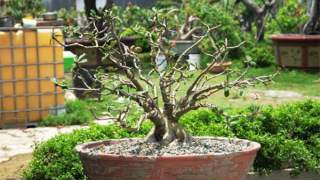
Finally, a pot with a drainage hole is a fundamental defense against structural collapse and disease. Our caudex is a specialized water-storage organ composed of soft, succulent tissue. When the soil remains constantly wet, the base of our caudex is in continuous contact with moisture. This leads to the tissue becoming soft, mushy, and susceptible to fungal and bacterial infections. What often starts as a small, soft spot at the soil line can quickly develop into a fatal case of stem rot, causing our entire structure to collapse from the inside out. A well-draining pot ensures that the critical area where our stem meets the soil remains dry for the majority of the time, keeping the tissue firm and resistant to pathogens.