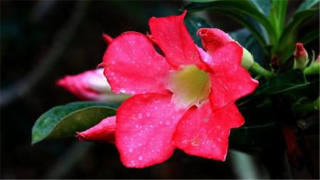
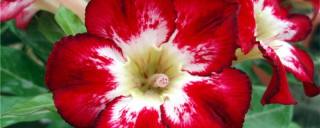
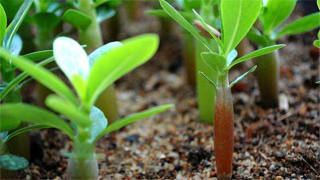
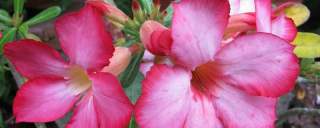
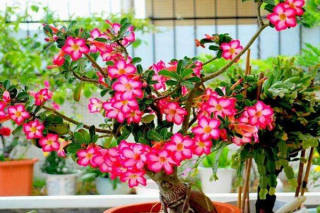
To understand the relationship between low humidity and a Desert Rose (Adenium obesum), you must first consider my point of origin. I am a succulent plant native to the arid, sub-Saharan regions of Africa and the Arabian Peninsula. In my natural habitat, low humidity is the standard, not the exception. My entire physiology has evolved over millennia to not just tolerate, but to thrive in conditions of high light, infrequent water, and dry air. Therefore, from my perspective, low humidity itself is not an inherent problem. In fact, it is often preferable to the excessively high humidity that can cause significant health issues for me.
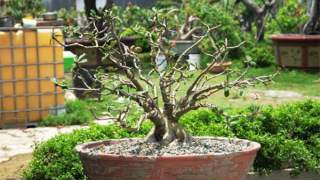
For a plant like me, low humidity presents a specific challenge: transpiration. This is the process where water evaporates from my leaves through tiny pores called stomata. In low humidity, the gradient between the moist interior of my leaf and the dry outside air is very steep, which pulls water vapor out of me more rapidly. While this sounds stressful, my body is built for it. My small, thick, waxy leaves are designed to minimize water loss. My large, swollen caudex (the trunk) acts as a water reservoir to replenish what is lost. So, in a balanced environment, low humidity simply means my natural water-conservation systems are operating as intended. It can even be beneficial, as the dry air helps my soil dry out appropriately between waterings, which is critical to prevent root rot.
The issue with low humidity is rarely the dryness of the air alone. The problem arises when it is combined with other suboptimal care conditions, turning a manageable situation into a stressful one. The primary complicating factor is underwatering. If my caregiver allows my soil to become bone dry for extended periods while the air is also very dry, the combined effect can dehydrate me beyond my reserves. You might see my leaves become limp, wrinkled, or begin to yellow and drop. This is not solely the fault of the low humidity; it is a symptom of insufficient water uptake to match the transpiration rate. Similarly, if I am placed near a hot air vent or a roaring fireplace, the intense, dry heat can accelerate moisture loss to a point that even my adaptations struggle to keep up.
From my point of view, I am far more fearful of consistently high humidity than I am of low humidity. Moist, stagnant air creates the perfect environment for fungal diseases and pests. Botrytis (gray mold) and powdery mildew are two common foes that thrive in humid conditions and can quickly damage my leaves and stems. Furthermore, high humidity slows down the evaporation of water from my soil. Since I am a succulent that requires my roots to dry out completely, perpetually damp soil is a death sentence, leading to root rot that can kill me from the ground up. Therefore, the dry air associated with low humidity is a key component in keeping these devastating issues at bay.
The ideal humidity range for me is between 30% and 50%. This is typically the level found in most comfortably air-conditioned homes. If you are concerned that your indoor air is excessively dry, especially during winter, there are simple ways to help without creating a jungle-like environment. Grouping me with other plants can create a slightly more humid microclimate through collective transpiration. Alternatively, placing my pot on a pebble tray filled with water (ensuring the pot sits on the pebbles, not in the water) provides localized evaporation. The most important thing you can do is to monitor my watering needs closely. In low humidity, I may need water slightly more frequently than I would in a more humid space, but always check that the soil is completely dry before giving me a deep, thorough drink.