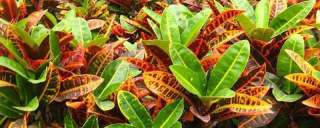
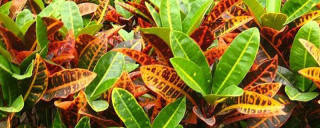
Greetings, dedicated caretaker. I am your Croton, a vibrant tapestry of leathery leaves painted with shades of crimson, gold, orange, and deep green. To achieve the spectacular color display you desire, you must understand my language—the language of light, water, and, most critically for my brilliance, nutrients. Fertilizer is not merely food; it is the very pigment of my expression. Here is my ultimate guide, from my roots to your watering can.
My vivid colors are not just for your admiration; they are a testament to my health and a sophisticated adaptation. The pigments that create my fiery hues—anthocyanins (reds and purples) and carotenoids (oranges and yellows)—often act as a natural sunscreen, protecting my chlorophyll (the green pigment essential for photosynthesis) from intense light. To produce these spectacular pigments in abundance, I require a specific and balanced diet. Think of fertilizer as the high-quality fuel for the factory of photosynthesis. Without the right nutrients, the factory slows down, and my energy is diverted to mere survival, resulting in dull, predominantly green leaves.
I crave a balanced, complete fertilizer. Look for a formula where the three numbers on the package (N-P-K) are relatively even, such as a 10-10-10 or a 3-1-2 ratio. The first number, Nitrogen (N), is crucial for strong, green leafy growth. However, an excess of nitrogen will push me to produce excessive chlorophyll at the expense of my other colors, turning me into a mostly green bush. Phosphorus (P), the second number, is vital for strong root development and energy transfer, which supports overall plant vigor. Potassium (K), the third number, is the key to color intensity! It acts as a regulator, ensuring efficient water uptake and enzyme activation, which directly enhances the production and stability of my colorful anthocyanin and carotenoid pigments.
My appetite is directly tied to the sun. During the long, bright days of spring and summer, I am in my active growth phase. The abundant light supercharges my photosynthesis, and I am hungry for nutrients to support new, brilliantly colored leaves. This is when I need regular feeding. A consistent schedule of a diluted, liquid fertilizer every 4-6 weeks is perfect. As autumn arrives and the days shorten, my growth slows dramatically. My systems begin to wind down for a rest. Feeding me during this dormant period is not only unnecessary but harmful. The unused salts from the fertilizer will accumulate in my soil, potentially burning my delicate roots and causing stress, which leads to leaf drop.
Please, always water me thoroughly with plain water a few hours before you fertilize. My roots are sensitive, and applying fertilizer to dry soil can cause severe root burn. When applying the fertilizer solution, do so gently at the base of my stem, ensuring it soaks evenly into the soil until it just begins to drain from the pot's bottom. The goal is to moisten the entire root ball without creating a soggy environment. A thorough watering after feeding can also help distribute the nutrients evenly and prevent salt buildup. Remember, my leaves do not need to be sprayed with fertilizer; it can cause foliar burns and attracts dust.
More is not better. Over-fertilizing is one of the fastest ways to cause me harm. The signs are clear: a crust of white fertilizer salt on the soil surface, brown and crispy leaf tips and margins, and ironically, a loss of my vibrant color or stunted growth. If you see these signs, flush my soil repeatedly with a large volume of clean water to leach out the excess salts. When in doubt, it is always safer to under-fertilize than to over-fertilize. A slightly hungry Croton can be fed, but a root-burned Croton faces a long and difficult recovery. Your patience and observation are the most valuable fertilizers of all.