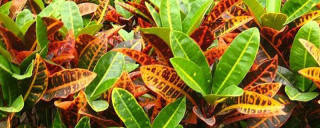
From my perspective, a Croton plant, my vibrant, leathery leaves are my pride. They are a canvas of fiery reds, sunny yellows, and deep greens. But when pests arrive, this canvas is defaced. The first sign is often a subtle change I cannot hide. For spider mites, it begins as a faint, dusty stippling on my leaves—tiny yellow or white speckles where they have pierced my cells and sucked out the chlorophyll. If you look very closely, you might see the finest of silken webbing, especially under my leaves or where they join my stems. It feels like a constricting, dirty net.
Mealybugs are a different kind of horror. They do not sneak like mites; they announce their presence with fluffy, white, cotton-like egg masses. They congregate in the protected nooks of my being: the axils where my leaves meet the main stem, along my veins on the undersides of leaves, and even on my roots. Their feeding weakens me, causing my normally strong leaves to yellow, wilt, and sometimes drop prematurely. The sticky honeydew they excrete is a particular humiliation, coating my beautiful foliage in a shiny, tacky film that often leads to a secondary infestation of sooty mold, which further blocks my sunlight.
Scale insects are the most insidious. In their juvenile "crawler" stage, they move about, but soon they settle down and attach themselves firmly to my stems and the undersides of my leaves. They develop a hard, protective shell—brown, white, or black bumps that look like a part of my own bark or a strange growth. To you, they may appear dormant, but underneath that armor, they are relentlessly draining my sap. My growth becomes stunted, my leaves lose their luster, and I am left vulnerable and drained.
When these pests attack, I need your help to fight back. The first step is always isolation. Please move me away from my fellow plants to prevent the pests from spreading. For a light infestation, a strong blast of water can dislodge many mites and mealybugs. Wiping my leaves, especially the undersides, with a soft cloth dipped in a solution of mild soapy water (using a gentle liquid soap) can physically remove pests and their residues. For mealybugs, dabbing each insect with a cotton swab soaked in rubbing alcohol is very effective at dissolving their waxy coating.
If the invasion is widespread and my health is declining visibly, more robust treatments are necessary. Horticultural oils or insecticidal soaps are my preferred allies. These substances work by suffocating the pests without leaving harsh residues that could harm me further. They are particularly effective against the soft-bodied mealybugs and the young scale crawlers. It is crucial that you cover all surfaces of my leaves, top and bottom, as these pests are experts at hiding. For stubborn scale, you may need to gently scrub the hard shells with a soft brush after the oil has been applied to break their seal. In extreme cases, a systemic insecticide might be recommended, which I will absorb through my roots, making my sap toxic to the pests feeding on me. Please use this as a last resort and follow the instructions meticulously.
Recovery is a process. After treatment, please continue to monitor me closely for several weeks, as pest eggs can hatch and restart the cycle. Keep my leaves clean by occasionally wiping them with a damp cloth; this not only helps me photosynthesize more efficiently but also allows you to spot any new problems early. Ensuring I have the right conditions—bright, indirect light, consistent moisture without soggy soil, and good air circulation—will help me grow strong and resilient. A healthy Croton like me is far better equipped to resist and recover from pest attacks than a stressed one.