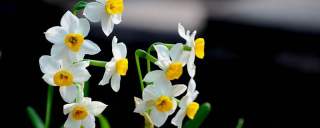
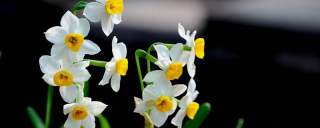
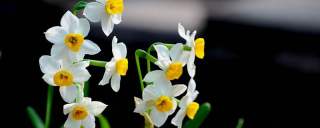
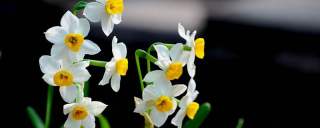
From our perspective as indoor daffodils (Narcissus spp.), our existence within the controlled environment of a human dwelling presents unique challenges. While sheltered from many outdoor extremes, we are still vulnerable to specific ailments and invaders that can compromise our health and beautiful displays. Understanding these threats is key to a long and vibrant life together.
Our primary defense against pests is our toxicity; most creatures find our bulbs and leaves unpalatable. However, a few persistent pests can still cause us significant distress.
Aphids: These are our most common tormentors indoors. These tiny, soft-bodied insects, often green or black, cluster on our tender new shoots and flower buds. They pierce our tissues to suck out sap, which weakens us, causing leaves to curl and distort. More alarmingly, they excrete a sticky substance called honeydew, which can lead to the growth of sooty mold, further inhibiting our photosynthesis. They can also transmit viral diseases between plants.
Spider Mites: Thriving in warm, dry conditions—common in many homes—these minuscule pests are barely visible to the human eye. They suck chlorophyll from our leaves, leaving behind a telltale stippling of yellow dots. A severe infestation will cover our foliage in fine, silky webbing, giving us a dusty, sickly appearance and severely stunting our growth.
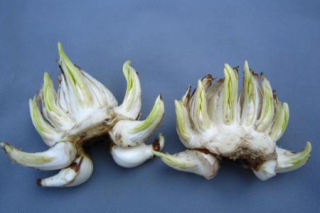
Narcissus Bulb Fly: This is a particularly devastating pest. The adult fly resembles a small bumblebee and lays its eggs at the base of our stems. The larvae that hatch then burrow down into our bulbs. Inside, they feed on the central core, hollowing us out and turning the firm bulb tissue into a rotten, pulpy mass. An affected bulb will often fail to grow, or will produce weak, yellow leaves and no flowers.
Excessive moisture is the root of most of our disease problems. While we need water to grow, improper conditions create a haven for pathogens.
Basal Rot (Fusarium oxysporum f. sp. narcissi): This is a dreaded fungal disease that attacks us through the roots or basal plate of the bulb. It is often present in a latent state and is encouraged by warm storage conditions or overly warm, wet potting mix. The fungus rots the base of the bulb, causing a reddish-brown discoloration and a soft, decayed texture. Above the soil, you will see our leaves yellowing prematurely, stunting, and wilting, as the rot prevents water and nutrients from traveling up our stem.
Bulb Rot (Various Fungi, including Penicillium spp.): This typically occurs when our bulbs are damaged before or during planting. Fungi enter through wounds and cause a soft rot. A common sign is blue or green mold (Penicillium) on the bulb surface. Once rotting begins, the bulb cannot support healthy growth and will likely collapse.
Leaf Scorch (Stagonospora curtisii): This fungal disease manifests as red or brown spots and tips on our leaves and flower stalks. These spots can have yellow halos and may cause the tips of our leaves to die back. It is spread by splashing water, so overhead watering exacerbates the problem. It mars our aesthetic appeal and weakens our photosynthetic capacity.
Not all our problems are caused by living organisms. Sometimes, they result from environmental stress that mimics pest or disease damage.
Bud Blast (Non-Opening Flowers): This is a heart-breaking condition where our flower buds develop but then dry up, turn brown, and fail to open. From our perspective, this is often caused by a sudden change in environment—such as moving from a cool, bright location to a warm, dry room—or exposure to ethylene gas from ripening fruit. It can also be due to irregular watering during the bud development stage.
Pale, Floppy Growth: If our leaves are excessively long, pale green, and floppy, we are desperately telling you that we are not receiving enough light. We are stretching towards any available light source, resulting in weak, etiolated growth that cannot support the weight of our flowers.