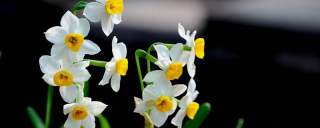
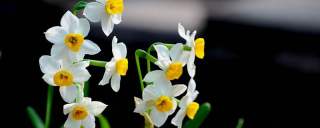
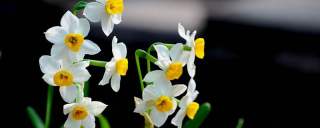
From a botanical perspective, the phenomenon of narcissus stems (more accurately, the flower stalks or scapes) becoming excessively tall and weak—a condition often called "leggy"—is primarily a survival strategy gone awry due to an imbalance in environmental conditions. The plant is responding to its surroundings based on deeply ingrained evolutionary programming.
As photosynthetic organisms, plants are fundamentally driven to capture light energy. Their stems exhibit positive phototropism, meaning they grow towards a light source. In a domestic setting, narcissus bulbs are often forced into bloom indoors during winter. The available light is typically insufficient in both intensity and duration compared to their natural outdoor environment. The plant perceives this low-light condition as being in a crowded or shaded spot. To compete for survival, it initiates a desperate growth spurt, elongating its cells rapidly in an attempt to reach a stronger light source. This rapid elongation prioritizes height over girth and strength, resulting in a tall, thin, and weak stem that cannot adequately support the weight of the flower head. The internodes (the segments between leaves) become unusually long, creating the "leggy" appearance.
Temperature plays a crucial and often complementary role to light. Narcissus stems elongate more rapidly in warmer conditions. In their natural habitat, cool spring temperatures help regulate stem growth, keeping it compact and sturdy. However, when placed in a warm room, perhaps on a windowsill above a radiator, the plant's metabolic processes accelerate. The combination of warm temperatures (encouraging fast growth) and low light intensity (triggering a search for light) creates a perfect storm for legginess. The stem grows quickly without developing the structural integrity needed for support, as the plant is diverting its limited energy reserves into rapid vertical expansion rather than robust cellular development.
While light and temperature are the primary factors, water and nutrient availability within the bulb also influence growth patterns. A narcissus bulb is a self-contained storage organ packed with the starch and nutrients needed for the entire flowering cycle. If the plant is overwatered, it can sometimes fuel excessive, soft growth. The ample water supply allows for rapid cell expansion, further contributing to weak stem structure. Conversely, the legginess is not typically caused by a lack of fertilizer, as the bulb itself provides all the necessary resources for the initial growth. The problem lies not in a lack of building materials, but in the hormonal instructions dictating how those materials are used—instructions dictated by environmental cues.
This entire process is orchestrated by plant hormones, primarily auxin. When light is low, auxin accumulates on the shaded side of the stem. This hormone stimulates cell elongation on that side, causing the stem to bend and grow towards the light. In consistently low-light conditions, auxin promotes continuous and rapid elongation of cells along the entire stem. The cells become larger but do not develop the thick, sturdy cell walls they would under brighter light. Therefore, the hormonal response, which is perfectly adaptive in a natural, dappled-light forest environment, becomes maladaptive in the stable but insufficient light of an indoor setting.