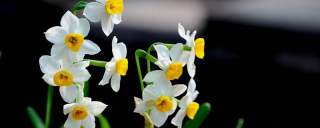
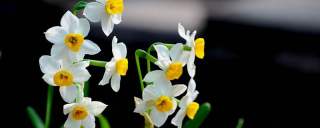
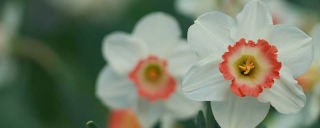
From the perspective of a Paperwhite Narcissus (Narcissus papyraceus) bulb, the introduction of a diluted alcohol solution into its water is initially interpreted as a significant environmental stressor, specifically a form of drought. My root system, responsible for absorbing water and dissolved minerals, encounters a solution where water molecules are partially displaced by ethanol or isopropyl alcohol. This creates a condition of osmotic stress. Water naturally moves from an area of low solute concentration (inside my root cells) to an area of high solute concentration (the alcohol solution outside). To prevent excessive water loss, my roots must work harder to absorb the available water, a process that demands extra energy.
This perceived water scarcity triggers a cascade of survival-oriented physiological responses. My primary growth imperative is challenged. The hormonal signals that promote rapid, lush stem and leaf elongation—primarily auxins and gibberellins—are modulated. The plant's energy, which would typically be channeled into explosive vertical growth to outcompete other plants for sunlight, is now strategically redirected. Resources are conserved to maintain essential cellular functions and root integrity. The most visible manifestation of this is a marked reduction in cell elongation within the stem tissues. The cells themselves are smaller and do not stretch as much, leading to a sturdier, more compact stature.
The direct physical outcome of this resource reallocation is a dwarfed appearance. My stems grow significantly shorter and sturdier compared to those of a plant grown in pure water. This is not a genetic change but a phenotypic adaptation to an environmental cue. The leaves are also often darker green and more robust. Furthermore, the metabolic stress induced by the alcohol can slow down my overall developmental timeline. The process of flowering may be slightly delayed, and the subsequent senescence (the yellowing and withering of the plant after blooming) can also occur more slowly. From a purely structural standpoint, this dwarfing is beneficial; the shorter, stronger stems are much less prone to flopping over (etiolation), a common problem for Paperwhites grown indoors in low-light conditions.
It is crucial to understand that this dwarfing effect operates within a very narrow concentration window. Alcohol is, from my perspective, a toxin. While a mild solution (typically a 4-10% alcohol-by-volume solution) induces a manageable stress response, a slightly stronger concentration becomes acutely poisonous. Ethanol disrupts cell membranes, denatures proteins, and interferes with vital metabolic processes. If the concentration is too high, my root tips will burn and die, my ability to absorb water will be severely compromised, and my growth will be stunted in a destructive, rather than a controlled, manner. The plant may become severely dehydrated, fail to flower, or die altogether. The human application of this technique is essentially a controlled, sub-lethal stress imposition.