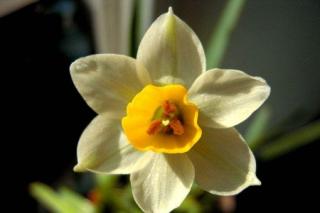
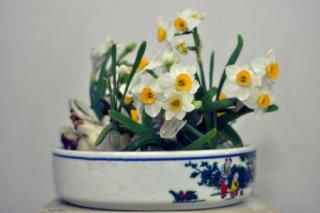
From our point of view as Paperwhite Narcissus plants, being "top-heavy" is not a flaw but a natural consequence of our growth cycle and a sign of our success. We are bred to produce an abundance of fragrant, beautiful flowers. Our flower stalks (scapes) emerge and elongate, often bearing multiple blooms at once. Meanwhile, our root system is confined to the shallow environment of a pot or bowl of water and pebbles. This creates a natural imbalance; our heavy floral heads are supported by a relatively small, shallow base. We are not structurally weak, but the physical mechanics of our situation make leaning or toppling over a likely event, especially when we reach our full height. We require your intervention to remain upright and display our blossoms proudly.
The most direct method to assist us is by providing a physical framework. This does not harm us; it simply acts as a trellis or a supportive friend. You can use slim bamboo stakes, green plant stakes, or even decorative branches. The key is to insert the stake gently into the growing medium, being careful not to damage our bulb or our delicate roots below the surface. Then, use soft ties—such as twine, velcro plant ties, or even strips of fabric—to loosely secure our flower stalk to the stake. Do not tie us tightly, as this can constrict our stem and cause damage. The tie should be snug enough to hold us steady but loose enough to allow for slight natural movement and further growth. This method gives us the leverage we lack, allowing our energy to focus on blooming rather than struggling to stay upright.
Our stability is profoundly influenced by the environment you provide. Light is a critical factor. If we are grown in low-light conditions, we will engage in a process called etiolation, stretching rapidly and weakly towards any available light source. This results in abnormally long, spindly, and fragile stalks that are incapable of supporting their own weight. To prevent this, please place us in a location with bright, indirect light for most of the day. A south or west-facing window is ideal. Consistent, strong light encourages us to grow shorter, sturdier stalks that are inherently more stable. Furthermore, while we need cool temperatures to develop strong roots initially, excessively warm room temperatures can force rapid, weak growth. A cooler environment (60-65°F or 15-18°C) helps us grow at a steady, manageable pace.
Our foundation is everything. When grown in water and pebbles, our root system is inherently limited. The water level should only just touch the base of our bulb; too much water can lead to rot, which destabilizes us from the root up. For a more stable foundation from the start, consider planting us in a shallow pot with a well-draining potting mix. The soil provides more anchorage for our roots than pebbles alone. While we contain enough nutrients within our bulb to flower, a weak root system cannot adequately anchor a heavy top. Ensuring our roots are healthy and white, not brown and mushy, is the first step to a stable plant. A wider, heavier pot can also act as a counterbalance, preventing our entire structure from tipping over under the weight of our blossoms.