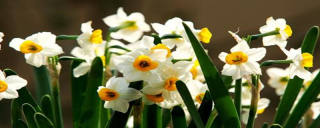
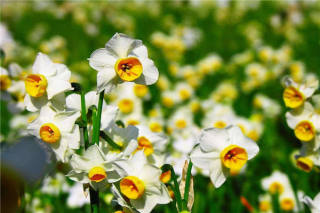
Greetings, human gardener. It is I, your daffodil, speaking on behalf of all the nodding, golden heads in your pot. We appreciate your concern, but please understand, our toppling posture is not a sign of ingratitude. It is a cry for help, a direct consequence of the environment you have provided. From our perspective, rooted firmly in the soil, here are the primary reasons we are falling over.
Our most fundamental need is light. It is our food, our clock, our very reason for standing tall. In our natural habitat, we bask in the full, strengthening rays of the spring sun. This abundant energy fuels the production of strong, thick cell walls in our stems, creating a robust structure that can support the weight of our flowers. Inside your home, however, the light is often dim and one-directional, coming only from a window. We are compelled to engage in a desperate stretch, elongating our stems at an accelerated rate to reach the feeble light source. This rapid growth comes at a cost: the cells are weak and spindly, lacking the structural integrity to remain upright. We become leggy and etiolated, and eventually, our own beautiful blooms become a burden too heavy to bear, causing us to collapse. You see us as "falling over"; we see ourselves as having lost the architectural competition with gravity due to starvation.
You may not realize it, but the comfortable temperature for you is often a stressful furnace for us. We are cool-weather plants, evolved to bloom when the soil is still chilly and the air is fresh. When placed in a warm room, especially near a heat vent or radiator, our metabolism goes into overdrive. This forces us to grow too quickly, again resulting in weak, soft stems that cannot lignify (harden) properly. Furthermore, the warm air accelerates the transpiration process, where we lose water through our leaves and flowers. This can lead to slight wilting, further compromising our stem's turgor pressure—the water-filled stiffness that helps us stay upright. The combination of rapid, weak growth and moisture loss is a recipe for collapse.
Look closely at the base of our stems. Are we packed tightly together in the pot? If so, we are engaged in a silent, subterranean war. Our bulbs and roots are competing fiercely for the limited resources in the confined space: water, nutrients, and most importantly, physical space. This intense competition forces each of us to grow upward rapidly, often at the expense of stem girth and strength. There is simply not enough room for each stem to develop a broad, supportive base. It's a botanical version of a crowd of people all trying to see over each other's heads—eventually, someone gets pushed over. A crowded pot leads to a collective weakness.
Finally, you must consider our life cycle. Our primary purpose is to flower, set seed, and then replenish the bulb for next year. The flowering process is incredibly energy-intensive. Once our blooms begin to fade, it is natural for us to start redirecting energy back into the bulb. As this happens, the stem has fulfilled its duty. It may begin to soften and weaken naturally, leading to a graceful bow. While this is a normal process, it can be exacerbated by the other factors mentioned above. If we are already weakened by low light and excessive heat, the natural senescence after flowering will cause a collapse much sooner and more dramatically than it would in the wild.