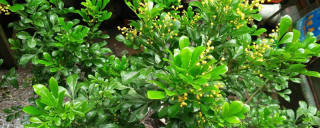
Aglaia odorata, commonly known as Chinese Perfume Plant or Mock Lemon, is a tropical to subtropical evergreen shrub belonging to the Meliaceae family. From a botanical perspective, its natural growth habit is multi-stemmed and bushy, often reaching heights of 3 to 6 feet as a landscape shrub. To train it into a standard (a tree-like form with a single, clear trunk and a rounded canopy), one must work against this innate tendency. This process requires consistent intervention to select and strengthen a central leader (the main trunk) while systematically removing competing basal shoots (suckers) and lower lateral branches. Understanding that the plant will persistently try to revert to its shrubby form is key to the long-term maintenance of the standard shape.
The most effective starting point is a young, healthy, and vigorous Aglaia odorata plant. Look for a specimen that already exhibits a strong, central, and preferably straight stem. This stem will become the future trunk. The initial pruning is critical. Using clean, sharp bypass pruners, remove all other stems growing from the base of the plant, cutting them as close to the soil line as possible. This forces the plant's energy into the single selected leader. Simultaneously, remove all the lateral branches growing from the lower portion of this chosen stem. Decide on the desired height of the clear trunk (e.g., 2-3 feet) and strip all side branches up to that point. This creates the "standard" section of the trunk.
As the central leader grows upward to achieve the desired height before the canopy forms, it may be too slender to support itself, especially when a leafy canopy develops later. A sturdy stake, such as a bamboo cane or wooden dowel, is essential. Insert the stake into the potting mix close to, but not damaging, the main root ball. Gently but securely tie the main stem to the stake using soft plant ties or twine in a figure-eight pattern. This pattern prevents the tie from girdling or cutting into the expanding stem. The stake provides necessary support against wind and the plant's own weight, ensuring the trunk grows straight and strong. The stake should remain until the trunk is thick and woody enough to be self-supporting, which may take a year or more.
Once the central leader has grown approximately 6-12 inches above your chosen clear-trunk height, it is time to encourage the formation of the canopy, or "head." Pinch or tip-prune the very top of the leader (the apical meristem). This action removes apical dominance, the hormonal control that suppresses the growth of lateral buds below the tip. By pinching the tip, you stimulate the buds immediately below the cut to break and grow into new branches. As these new branches develop, allow them to grow to a few inches in length before pinching their tips as well. This repeated pinching encourages branching and denser foliage, gradually building a rounded, ball-shaped canopy. This process of selective pinching and light pruning to shape the canopy is ongoing throughout the plant's life.
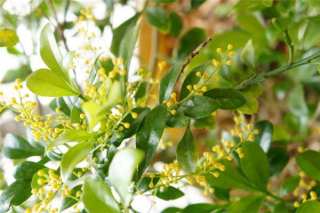
Maintaining a standard form is a continuous process. The plant will continually attempt to produce new shoots (suckers) from its base and along the clear trunk. These must be rubbed off or pruned away as soon as they appear to preserve the tree-like silhouette. The canopy will also require regular pruning to maintain its compact, rounded shape and to prevent it from becoming too heavy for the trunk. From a nutritional standpoint, a plant trained as a standard has significant energy demands. It is supporting a large canopy of foliage on a single trunk. Regular feeding during the active growing season (spring and summer) with a balanced, slow-release fertilizer is crucial to provide the nutrients needed for sustained healthy growth, vibrant foliage, and its characteristic fragrant, yellow flowers.