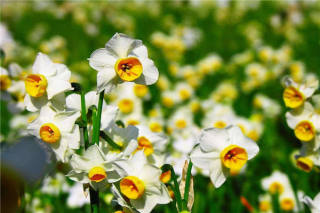
I am a Narcissus bulb, a vessel of life waiting patiently in the cool, dark earth. Inside me, I hold the complete blueprint for my future self: leaves, stems, and the promise of fragrant flowers, all compressed tightly within my layers. To begin our journey together, you must first mimic the end of my natural winter rest. Store me in a cool, dark place for a period, perhaps a paper bag in your refrigerator's crisper drawer (but away from apples, as their ethylene gas can harm me). This chilling period satisfies my need for a dormant phase, signaling that it is safe to emerge. When you bring me out into the light and warmth, I interpret this as the arrival of spring, and the forcing process truly begins.
Your first touch is crucial. Gently remove the dry, papery brown tunic from my exterior. This allows me to absorb water more easily and gives me a cleaner appearance. You may also need to peel away the dry skin from my base to expose the root buds, which appear as small, bumpy nodules. Next, carefully make shallow, vertical cuts into the top of my pointed "nose," about a centimeter deep. This simple act, called scoring, helps my green leaves emerge more easily by relieving the pressure of the tightly packed scales. Now, place me in a specialized forcing vase or a shallow bowl. My base must just kiss the water, with only my roots touching the surface. If I am submerged too deeply, I will rot, and our journey will end prematurely. Support me with stones or decorative pebbles if you are using a bowl; they will anchor me and keep my upper body dry.
For the first one to two weeks, I require a specific environment to establish my foundation. Place me in a cool location, ideally between 10-15°C (50-60°F), with plenty of indirect light. A windowsill in an unheated room or a bright garage is perfect. This cool period is non-negotiable. It encourages me to direct my energy downward, sending out a network of white, fibrous roots into the water. These roots are my lifeline; they will drink up the water and nutrients stored within my own bulb to fuel my growth. Ensure my water remains clean and fresh, topping it up as needed to maintain contact with my base. During this time, you will see little change above the surface, but beneath, I am building the anchor that will support my spectacular display.
Once my root system is established—a tangle of white roots visible in the vase—you will notice green shoots sprouting from my top. This is my signal that I am ready for the next stage. You can now move me to a warmer, brighter spot in your home to encourage leaf and flower stalk development. I still prefer bright, indirect light. Direct, hot sun can scorch my leaves and cause them to grow too tall and floppy. As I grow, I will consume more water, so check my levels daily. Rotate my container occasionally to ensure I grow straight, as I will naturally lean toward the light source. In a few weeks, you will witness the reward of your patience: flower buds will swell from within the sheaths of my leaves and slowly open into beautiful, fragrant blooms.
My glorious flowering period may last a week or two. After the flowers fade, you must understand my biology. I have expended the vast majority of my stored energy to produce these blooms for you in water. Unlike my soil-planted cousins, I will not have the resources to recharge and bloom again indoors next year. You can cut down the flower stalks but allow my leaves to continue absorbing sunlight until they yellow and wither naturally. This process allows me to photosynthesize and store a small amount of energy back into my bulb. Ultimately, my life cycle for indoor forcing is complete. I have fulfilled my purpose, offering you a glimpse of spring's beauty from within the heart of my bulb.