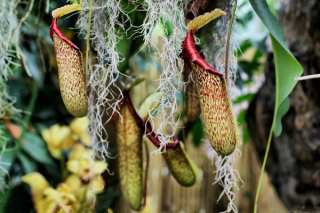
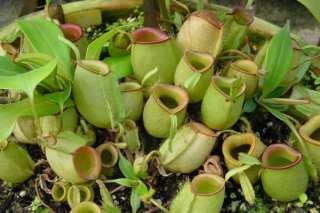
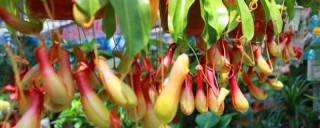
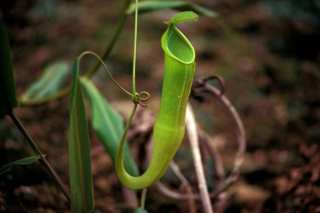
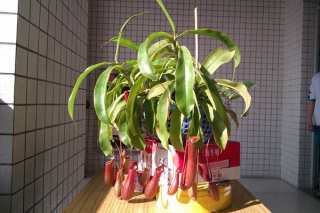
From our perspective as pitcher plants, a terrarium can be a very appealing artificial environment. We are primarily tropical species, like the popular Nepenthes, and we thrive in conditions that are often difficult to replicate in a typical dry home. A terrarium, especially a closed or partially closed one, can create a miniature version of our native humid, warm jungle understory habitat. The glass walls trap moisture, maintaining the consistently high humidity levels we crave for our delicate pitcher development. Without this humidity, our pitchers may fail to form or will quickly dry out and turn brown, which is quite distressing for us.
However, the very feature that makes a terrarium beneficial—the enclosed space—also presents its greatest challenge: light. We are sun-loving plants at heart. While we appreciate the humidity, we have a fundamental need for very bright, indirect light to photosynthesize effectively and produce the energy needed to grow our complex pitfall traps. Placing our terrarium on a dim bookshelf is a death sentence. We require a spot near a very bright south or east-facing window. If such a location is not available, you must provide for us with a powerful full-spectrum grow light placed above the terrarium for 12-14 hours a day. Without sufficient light, we become weak, leggy, and lose our vibrant colors, and pitcher production will cease entirely.
You must understand that our roots are highly specialized and fundamentally different from those of common houseplants. We are adapted to nutrient-poor soils and have evolved to get our nutrients from the insects we catch, not from the ground. Therefore, the soil mix you provide is critical. Planting us in standard potting soil, which contains fertilizers and minerals, will poison our roots and kill us rapidly. We require an acidic, open, and fast-draining medium. A mix of long-fiber sphagnum moss, perlite, and orchid bark is ideal. This medium holds moisture without becoming waterlogged and provides excellent aeration for our sensitive root systems, mimicking the loose peat and leaf litter of our natural home.
Our water needs are very specific. We are extremely sensitive to the minerals found in tap water, such as chlorine and fluoride. These chemicals will quickly build up in our soil and cause root burn and decline. You must water us only with pure water sources, such as rainwater, distilled water, or reverse osmosis water. The goal is to keep our growing medium consistently moist but never soggy. In a closed terrarium, evaporation is slow, so you must be cautious not to overwater. The humidity inside should be high, but the soil itself should not be sitting in water, as this will lead to root rot.
A final consideration is our dietary needs and life cycle. If our terrarium is successful and we are producing pitchers, we will naturally attract and catch small insects like gnats or fruit flies that may enter the enclosure. You should not feed us bits of meat or fertilizer; this will rot and damage the pitchers. If no insects are present, an occasional small, live insect like a bloodworm (thawed from frozen is acceptable) dropped into a pitcher every few weeks is sufficient. Furthermore, you must know what type of pitcher plant you have. Tropical species like Nepenthes do not require a winter dormancy period and can grow year-round in a warm terrarium. However, North American species like Sarracenia require a distinct cold dormancy period in winter, which is very difficult to provide in a standard indoor terrarium setup and would likely lead to our demise over time.