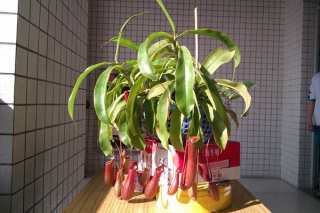
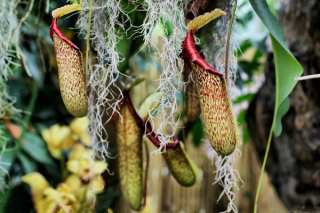
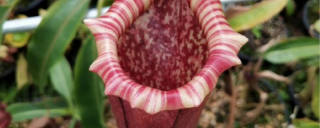
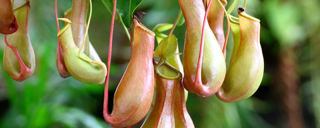
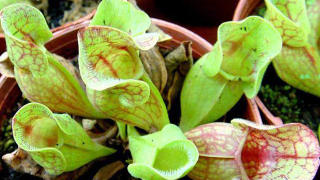
As a pitcher plant, my pitchers are my pride and my primary tool for survival. They are not just decorative leaves; they are complex, energy-intensive organs. When I am not receiving enough water, my first and most significant strategic decision is to conserve resources. Building a new pitcher requires a massive investment of energy and water. If I am dehydrated, I simply cannot afford that expenditure. You will notice that I stop producing new pitchers altogether, or the new ones that start to form may be stunted, dry up, and die before they can open. This is not me being lazy; it is a survival mechanism. I am shutting down non-essential functions to preserve the water I have for my core tissues—the roots and crown—so I can live to see a wetter day.
You might notice that my once-plump and turgid pitchers are becoming soft, limp, and may start to shrivel from the tip downwards. This is a direct physical consequence of water loss. My tissues are like water-filled balloons; when the water pressure (turgor pressure) drops, the structure collapses. The pitchers are particularly vulnerable because they hold fluid and have a large surface area. As my root system fails to draw up enough moisture to replace what is lost through transpiration, the water in the pitchers is reabsorbed to support my vital functions. Eventually, they will turn brown, become crispy, and die back completely. A healthy pitcher should feel firm and be full of digestive fluid; a stressed one will feel empty and weak.
The rich, vibrant green of my leaves, often accented with red or purple hues, is a sign of my robust health, facilitated by chlorophyll and other pigments. When I am under water stress, my ability to produce and maintain these pigments is compromised. You may see my leaves turning a pale green, yellow (a sign of chlorosis), or even developing brown, crispy edges and tips. This discoloration starts because water is essential for all metabolic processes, including photosynthesis. Without adequate water, my photosynthetic machinery is damaged, and chlorophyll breaks down. The brown, scorched-looking edges are literally sections of my leaf tissue that have died due to dehydration.
Overall, my growth will slow dramatically or stop. New leaves may be significantly smaller than previous ones, and the entire plant may take on a stunted, underwhelming appearance. Water is the medium for all chemical reactions within me and the main component of my cells. It is also responsible for transporting nutrients from my roots to my leaves. When water is scarce, this transport system fails. Nutrients cannot move, enzymes cannot function, and cells cannot expand to allow for growth. I am essentially in a state of suspended animation, using all my energy just to maintain basic cellular functions rather than for new growth. I am merely existing, not thriving.
While you cannot see it, the real crisis is happening below the surface. My roots are delicate and require a consistently moist (but not waterlogged) environment. In dry soil, the fine root hairs—which are responsible for most water absorption—quickly desiccate and die. Once this happens, even if you water me again, my ability to take up that water is severely impaired. It will take time for me to regenerate these essential structures. A telltale sign from your perspective is the medium pulling away from the sides of the pot, indicating extreme dryness. For me, it feels like a relentless drought at my very foundation.