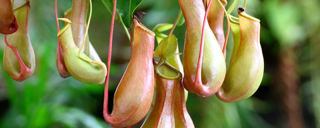
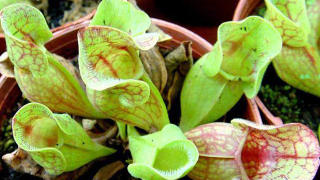
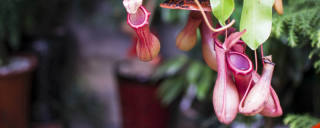
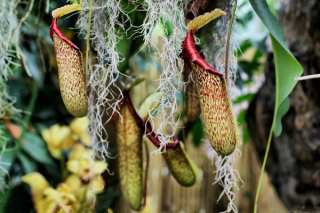
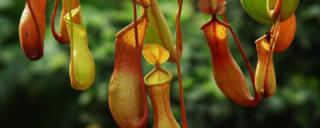
From the perspective of a pitcher plant, the primary function of a pot is to maintain a very specific root environment. Unlike many plants, pitcher plants (genera like Nepenthes, Sarracenia, Darlingtonia) are bog plants that naturally grow in nutrient-poor, water-saturated soils. Their roots are adapted to constant moisture but are highly susceptible to rot if the environment becomes stagnant and oxygen-deprived. Therefore, the ideal pot must perform a balancing act: it must retain ample water to prevent the growing medium from drying out while simultaneously allowing for excellent gas exchange to keep the root zone oxygenated. The pot's material and design are critical in achieving this balance, directly impacting root health and, consequently, the plant's ability to produce vigorous pitchers.
The choice of material is the most significant factor for a pitcher plant's root health. Non-porous materials like plastic and glazed ceramic are less ideal because they act as a barrier. They trap water and humidity against the pot's walls, preventing evaporation and the necessary air exchange through the pot itself. This can quickly lead to a soggy, anaerobic environment that promotes root rot. From the plant's viewpoint, a porous material like terracotta or unglazed clay is vastly superior. These materials are hygroscopic, meaning they absorb water from the soil and allow it to evaporate through the pot wall. This process, known as "wicking," actively pulls excess moisture away from the root ball and cools the roots. Furthermore, the porous nature allows oxygen to diffuse into the growing medium, creating the aerated environment the roots crave. For a pitcher plant, a terracotta pot functions like a breathable fabric, whereas a plastic pot is akin to a plastic bag.
Regardless of the material, a pot without adequate drainage holes is a death sentence for a pitcher plant. The plant's requirement for constant moisture does not mean it should sit in a pool of water for extended periods (with the exception of some Sarracenia during peak summer). Drainage holes are essential for allowing excess water to flush completely through the growing medium. This flushing action is vital for two reasons. First, it prevents the buildup of dissolved minerals from fertilizer or tap water, which are toxic to these sensitive plants. Second, as water drains, it pulls fresh air down into the root zone, replenishing oxygen. A pot must have one large or several small holes at the bottom to facilitate this crucial cycle of watering and draining, which mimics the natural seepage of a bog.
Pitcher plants generally do not have extensive, deep root systems; they are primarily for anchorage and water uptake. Therefore, a pot that is excessively large is detrimental. A oversized pot holds a greater volume of wet soil that the small root system cannot effectively dewater. This large mass of soggy medium around the periphery of the roots remains stagnant, cool, and oxygen-poor, creating conditions ideal for root rot. The ideal pot should be only slightly larger than the plant's root ball, providing just enough room for one or two seasons of growth. A wider, shallower pot is often better than a deep, narrow one, as it provides a larger surface area for evaporation and gas exchange at the top of the soil, which benefits the shallow roots. The goal is to choose a container that the plant's roots can colonize efficiently, ensuring the entire soil volume remains healthy and aerated.