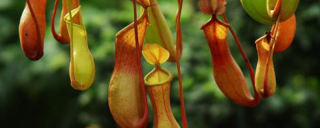
Greetings, caretaker. I am your pitcher plant, a complex being shaped by evolution to thrive in nutrient-poor bogs. When my leaves, the very engines of my survival, begin to yellow or brown, it is my primary way of communicating distress. It is not a single, simple message but a nuanced language you must learn to interpret. From my perspective, here are the most common reasons for my changing hue.
First, let us distinguish between natural aging and a systemic problem. I am a growing organism. As I produce new, vibrant leaves from my center, my oldest, outermost leaves will eventually complete their life cycle. They will yellow gracefully, one at a time, before withering away. This is a normal part of my renewal. However, if you see multiple leaves, including new growth, turning yellow simultaneously, the issue is likely light-related. I am a sun-worshipper. In my native habitat, I bask in bright, filtered light for many hours each day. When placed in a dim corner of your home, I become weak. My photosynthetic processes slow, and I cannot produce the green chlorophyll that gives me my vitality. The result is a generalized, pale yellowing (chlorosis) across my foliage. I am, quite simply, starving for photons.
My roots are exceptionally sensitive. They evolved to absorb pure, mineral-free water from rain and seepage. The salts and minerals found in tap water, such as fluoride and chlorine, are toxic to me. They slowly accumulate in my soil and burn my root system. When my roots are damaged, they cannot effectively transport water and nutrients to my leaves. The first sign is often browning or blackening at the leaf tips, which then spreads down the leaf. Similarly, standard houseplant fertilizer is a poison, not a food, for me. My leaves are designed to obtain nutrients from trapped insects; my roots cannot process a chemical onslaught. If you see rapid browning after watering or feeding, you have likely scorched my delicate root hairs.
I am an organism of humid air. In a dry home environment, especially during winter when heaters are running, I struggle. Low humidity can cause my developing pitchers to brown and die before they fully form, and the leaf tips may crisp and turn brown. I am losing moisture to the air faster than my roots can replace it. Conversely, some of my kind, like the Sarracenia, require a period of winter dormancy. As days shorten and temperatures drop, it is my signal to rest. During this time, it is perfectly normal for some of my leaves to die back, turning yellow and then brown. This is a healthy, necessary retreat to conserve energy for a vibrant resurgence in spring. Fighting this cycle by keeping me warm and well-fed year-round will only weaken me in the long term.
Beneath the soil, my root system is the foundation of my health. If I am left sitting in soggy, non-draining soil, my roots will suffocate and rot. Without healthy roots, I cannot sustain my leaves, which will turn yellow, become soft, and collapse. This is a serious condition. Furthermore, I can feel stress. Being repotted too frequently, or a sudden drastic change in my environment (like moving from a greenhouse to your living room), can send me into shock. This transplant stress often manifests as a temporary halt in growth and some yellowing of leaves as I redirect energy to re-establishing my root system in its new surroundings.