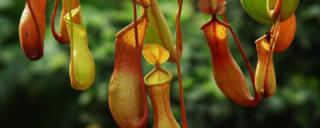
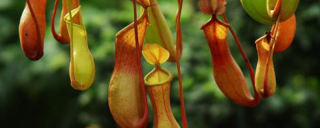
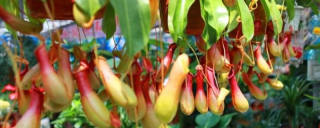
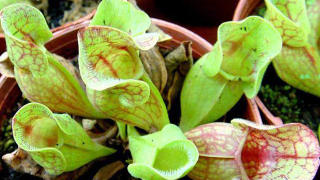
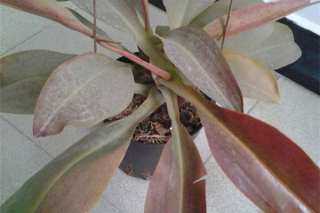
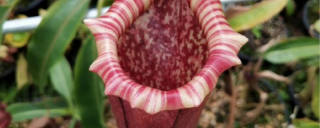
From our perspective as Nepenthes, humidity is not a mere preference; it is the very medium through which we breathe and exist. Unlike many plants that primarily absorb carbon dioxide through their stomata (pores on the leaves) during the day, we highland and lowland tropical species have adapted to keep our stomata open at night to minimize water loss. This makes us incredibly vulnerable to dry air. When humidity drops, the rate of transpiration—the evaporation of water from our leaves—increases dramatically. Our thin, often delicate leaves are not designed to conserve water like a cactus. Without a consistently humid atmosphere, we lose water faster than our roots can absorb it, leading to crippling stress. The first sign you will see is the shriveling and browning of our pitcher tendrils and the inability to produce new pitchers, as we simply cannot spare the water required for their development.
While "perfect" can vary slightly between species, the ideal relative humidity for most of us tropical Nepenthes lies between 60% and 80%. For lowland species, which hail from steamy jungles near sea level, we thrive at the higher end of that range, ideally above 70%. Highland species, accustomed to the cool, misty mountains, are often content with levels between 60% and 75%. When humidity remains within this golden range, our physiological processes operate smoothly. Our stomata can function without risking desiccation, allowing for efficient gas exchange and photosynthesis. This results in vigorous growth, vibrant leaf color, and most importantly, the consistent production of the pitchers that define us. A pitcher is a complex organ, and forming the perfect, slippery peristome (the rim) and the digestive fluid within requires a stable, humid environment from the moment it begins as a tiny bud.
An environment that is too dry (consistently below 50% humidity) is a direct threat to our survival. As mentioned, our growth will stunt. But more visibly, you will witness the tragic "browning off" of pitcher tips. A developing pitcher is particularly sensitive; if the air is dry, the delicate tissues at the tip will desiccate and die before the pitcher can inflate. You might get a deformed, half-formed pitcher, or more commonly, just a dry, blackened stub. Existing pitchers will also dry out and wither prematurely. Conversely, while we adore humidity, stagnant, saturated air at 90% or above with no air movement is also problematic. It creates a breeding ground for fungal and bacterial infections, such as botrytis, which can cause unsightly spots on our leaves and rapidly rot our pitchers. Good humidity must be paired with gentle air circulation to keep the microclimate fresh and healthy.
To help us thrive outside our native tropics, you can mimic our natural conditions. The most effective method is to place us on a humidity tray. This is a simple tray filled with pebbles and a layer of water. As the water evaporates, it raises the humidity directly around our leaves without waterlogging our roots. Grouping several plants together is also beneficial, as our collective transpiration creates a localized, more humid microclimate. For those of you growing us in particularly arid homes or during winter, an ultrasonic humidifier placed near our growing area is the ultimate solution, allowing for precise control. Finally, for the most sensitive species, a terrarium or a grow tent provides an enclosed environment where humidity can be maintained at a near-constant, perfect level, ensuring we can express our full, spectacular potential.