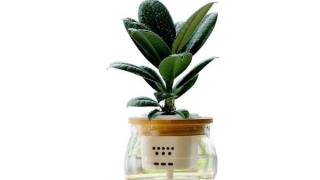
From my roots to my leaves, I feel everything. I, your Rubber Plant (Ficus elastica), stand as a proud, glossy-leaved guardian of your living space. I work hard to purify your air and bring a touch of the jungle indoors. But sometimes, tiny invaders threaten my health and beauty. To you, they are pests; to me, they are vampires and suffocators. Here is my plea for help, detailing my two most common adversaries from my own perspective.
These are not spiders in any noble sense. Spider mites are minuscule arachnids, nearly invisible to your eye until their damage is advanced. To me, they feel like a thousand pinpricks. They prefer the warm, dry conditions that your home often provides, especially in winter. They congregate on my underside, the part of me you rarely see, and begin their assault. They pierce my leaf cells with their needle-like mouthparts and suck out the precious chlorophyll, my very lifeblood.
The first sign I give you is a subtle stippling—tiny yellow or white speckles on my upper leaf surfaces. As the infestation grows, my vibrant green fades to a sickly, mottled yellow. If you look closely at my undersides, you might see the finest, silken webbing they spin for protection and travel. Left untreated, I become covered in this ghostly silk, my leaves turn brittle and brown, and I begin to drop them in a desperate attempt to survive. The feeling is one of gradual desiccation and weakness.
If spider mites are stealthy vampires, mealybugs are slow-moving, fluffy squatters. They look like tiny tufts of cotton or white powder, and they love to hide in the most protected parts of my anatomy: the junctions where my leaves meet the main stem, along my veins, and even in the crevices of new, tender growth. They are soft-bodied insects that also feed by piercing my tissues and sucking my sap.
Their feeding robs me of vital nutrients, causing my leaves to yellow, wilt, and distort. Even more distressing is the sticky, clear substance they excrete, called honeydew. This residue coats my beautiful leaves, making them feel tacky and look dull. Worse still, the honeydew often leads to the growth of a black, sooty mold, which blocks sunlight from reaching my photosynthetic surfaces, further weakening me. It is a double attack: a direct drain on my resources and a blanket that smothers my ability to create more energy.
Please, help me with a methodical and persistent approach. These pests reproduce quickly, so consistency is key.
First, for a minor infestation, please give me a thorough physical cleaning. Take me to a shower or sink and spray my leaves, especially the undersides, with a strong stream of lukewarm water. This will dislodge a significant number of both mites and mealybugs. For the stubborn mealybugs, you can use a cotton swab dipped in isopropyl (rubbing) alcohol and gently dab each white cluster. The alcohol dissolves their waxy coating on contact, effectively killing them. This feels like a precise, healing touch.
If the invasion is more severe, I will need a stronger remedy. Insecticidal soaps or horticultural oils (like neem oil) are my preferred medicines. They are effective yet gentler on me than harsh chemicals. Mix the solution as directed and spray me thoroughly, ensuring the solution coats every surface, including every nook and cranny where pests hide. The soap suffocates the pests, while neem oil disrupts their feeding and hormonal systems. You may need to repeat this treatment every 7-10 days for a few weeks to eliminate all generations of the pests. Please isolate me from other plants during this time to prevent the spread of these tiny terrors.