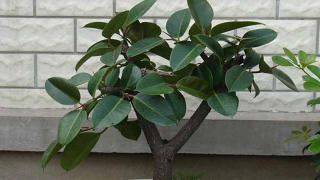
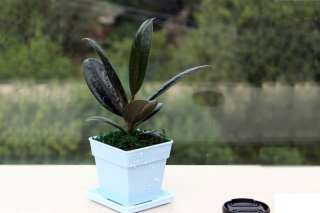
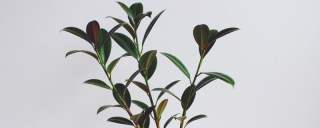
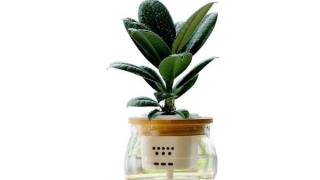
From my perspective as a Rubber Fig (*Ficus elastica*), propagation is not a human invention but a primal response to injury or opportunity. In our natural jungle habitat, a falling branch or a browsing animal can sever a part of me. Instead of accepting defeat, that severed piece holds the potential for a new, independent life. When you, the gardener, take a cutting, you are mimicking this natural event. I sense the incision not as an attack, but as a trigger. The cells near the wound site immediately begin to mobilize, preparing to create new roots. The key is that the cutting must be a "stem tip cutting" or a section of stem with at least one node—the thickened ring from which leaves emerge. This node is my command center, containing dormant meristem cells ready to become either a new leaf or, given the right cues, a root.
Before the cut is even made, I am preparing. The leaves are my solar panels, manufacturing the sugars (photosynthates) that will fuel the entire rooting process. Therefore, a healthy, mature leaf on the cutting is non-negotiable. However, a large leaf also presents a problem: it loses water through transpiration. To conserve my precious internal water reserves for root creation, you must reduce this loss. This is why you are advised to roll up the leaf and secure it or, in some cases, trim it. After the cut, I immediately begin to seal the wound. You will notice a milky white sap—this is my latex, which acts as a bandage to prevent pathogens from entering and to slow water loss. Letting this sap dry or washing it off is crucial to prevent it from forming a hard seal that would block the emergence of new roots.
This is the most critical phase. My cutting is now a separate entity, desperate to establish an independent root system to replace the water it is steadily losing. You have two main choices for me.
If you place me in water, I can dedicate all my energy to root formation because I am not fighting against a dense medium. I can see the light, which encourages me to believe I am in a favorable spot. The water provides constant hydration, but it is a sterile environment devoid of the oxygen and minor nutrients found in soil. My new roots, called "water roots," are adapted to this environment. They are often more fragile and can struggle to adapt when later transplanted into soil.
If you plant me directly into a well-aerated, moist potting mix (perhaps with extra perlite or vermiculite), I face a greater initial challenge. I must work harder to push roots through a resistant medium. However, the roots I develop are tough, soil-adapted "terrestrial roots" from the very beginning. The mix holds just enough moisture to keep my tissues hydrated while allowing oxygen to reach my cells, which is vital for respiration and growth. For me, soil feels more natural, but the balance of moisture is everything; too much, and my stem will rot, suffocating the nascent root cells.
Once positioned, my work begins in earnest. Within the warm, humid environment you provide (often under a plastic bag or in a propagator), I initiate a process called dedifferentiation. Cells at the node, which were destined to be stem tissue, revert to a more primitive state. Under the influence of hormones like auxin, these cells begin dividing rapidly, forming a white, bumpy mass known as a callus. Do not mistake this for rot; it is the nursery from which my adventitious roots will emerge. This entire process consumes a massive amount of my stored energy. I rely on the carbohydrates stored in my stem and the single leaf you left me. This is why a weak or thin cutting often fails—it simply does not have the internal resources to sustain itself long enough to form roots.
The moment the first tiny, white root tip pushes through the callus is my moment of rebirth. This root is programmed to grow downward, seeking moisture and anchorage. Once a small network of roots has formed, I can begin to absorb water efficiently again. You will see the first sign of this success not underground, but above: the existing leaf may appear perkier, and a tiny, shiny, red sheath will emerge from the very tip of the stem. This is a new leaf, proof that I have successfully transitioned from a dependent cutting into a self-sustaining plant, ready to grow towards the sun on my own terms.