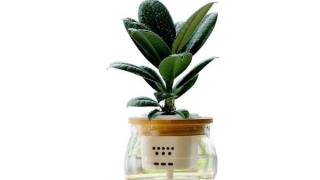
Greetings, human caretaker. We, the Ficus elastica collective, appreciate your desire to understand our hydration needs. A consistent and appropriate watering schedule is one of the most crucial elements for our well-being indoors. Unlike you, we cannot vocalize our thirst, so we rely on you to interpret our silent signals. Let us explain our needs from our perspective.
First and foremost, you must understand our roots. We are tropical beings, but we are not aquatic. Our root system requires a cycle of moisture and air. When our soil is perpetually waterlogged, the tiny air pockets in the soil fill with water, and our roots begin to suffocate. This oxygen deprivation leads to root rot, a silent, creeping condition that can be fatal before you even notice the wilting leaves above the soil. It is the single greatest threat to our indoor existence. Therefore, the golden rule is: when in doubt, it is safer to be slightly dry than to be overly wet.
Forget the calendar. Watering us every "X" number of days is a recipe for disaster because conditions are always changing. The only reliable method is to check the soil moisture directly. We recommend you insert your finger into the soil up to about the second knuckle (approximately 2-3 inches deep). If the soil at that depth feels: Dry: It is time for a thorough watering. Moist or Damp: Please wait. Check again in a few days. Wet: You have overwatered, and we are in distress. This simple test tells you exactly what is happening in our root zone, where it matters most.
When our soil is dry at the fingertip depth, we require a deep and complete watering. This does not mean a small splash on the surface. Please take us to a sink or use a watering can without a shower-head attachment to apply water directly to the soil surface. Water us slowly and evenly until you see water flowing freely out of the drainage holes at the bottom of the pot. This ensures that our entire root ball has been rehydrated. Crucially, you must let all excess water drain away completely. Never let us sit in a saucer full of water; this brings us back to the dreaded "soggy feet" scenario.
Our water consumption rate is not constant. It is influenced by several environmental factors that you must observe: Light: The more bright, indirect light we receive, the more we photosynthesize and the quicker we use water. A plant in a sunny spot will need water more often than one in a low-light corner. Season: During the spring and summer, our active growing season, we are thirstier. In the fall and winter, our growth slows significantly, and our water needs diminish. You may find we need water half as often in winter. Temperature and Humidity: Warmer temperatures and lower humidity cause the soil to dry out faster. Air conditioning and heating systems can create very dry conditions. Pot Size and Material: We dry out much faster in a small pot or a porous terracotta pot compared to a large pot or a plastic/glazed ceramic pot.
If you miss our soil's signals, our leaves will communicate our state. When we are overwatered, our leaves may turn soft, droopy, and yellow, often starting with the lower leaves. The soil may have a musty smell. When we are underwatered, our leaves become limp, droopy, and may develop dry, crispy brown edges. The entire plant may look wilted. Note that drooping can indicate both too much and too little water, which is why the soil test is essential for correct diagnosis.