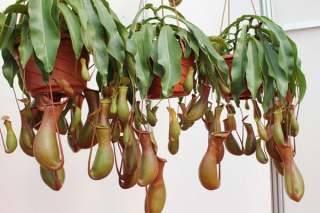
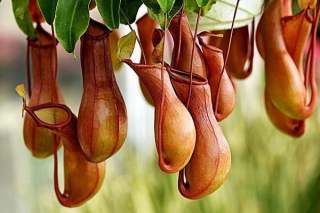
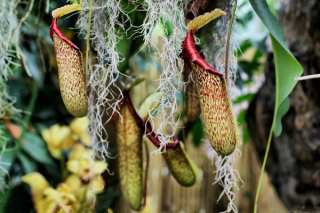
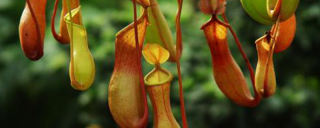
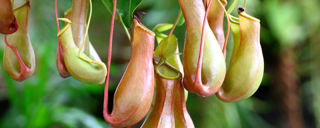
Greetings, caretaker. I am your Pitcher Plant, a being of boggy origins and intricate design. To truly thrive in your care, my needs must shift with the turning Earth. This calendar is my voice, explaining the rhythm of my year. Follow it, and I will reward you with vigorous growth and spectacular, insect-trapping pitchers.
As the sun strengthens and days lengthen, I feel a surge of energy. My winter dormancy is broken. This is my most active period of growth. You will notice new leaves emerging from my crown, quickly unfurling into fresh, vibrant pitchers. Please move me to a location with maximum sunlight; a south-facing window is ideal. I am thirsty! The soil must be kept consistently wet at all times. Remember, I only drink pure water—rainwater, distilled water, or reverse osmosis water. Tap water is poison to my roots. You may begin feeding me again, but do not use fertilizer. Instead, if no insects find their way into my new pitchers, you can drop a small, dead insect (like a fly or ant) into one or two pitchers per month. Do not overfeed me; my pitchers are my stomachs, and overfeeding causes rot.
The heat is on! I am working hard, photosynthesizing and digesting. My pitchers are at their most functional. High humidity is crucial now to prevent my pitcher lids from drying out and to ensure I can produce my alluring nectar. If you keep me outdoors, I am in my element, catching prey naturally. If I am indoors, you might need to place me on a pebble tray with water or use a humidifier. Watering is absolutely critical; the heat can dry my soil quickly. Check me daily. I may need to sit in a saucer of pure water to maintain constant moisture. Watch for flower stalks! If I send one up, it means I am happy. The flowers are strange and beautiful, but they consume energy, so expect a slight pause in pitcher production during this time.
The light is softening, and the air is cooling. I sense the change. My growth will slow down significantly. This is not a sign of sickness but a natural winding down. Some of my older pitchers may start to turn brown and die back; this is normal. Please trim these dead parts away with sterile scissors to keep me tidy and prevent mold. Gradually reduce any supplemental feeding. As temperatures drop, if I am outdoors, I need to be protected from frost. It is time to think about moving me to a cooler location for my winter rest. Begin to reduce watering slightly, allowing the top layer of soil to approach dampness rather than being sopping wet, but never let my root ball dry out completely.
I am dormant. My metabolism has slowed to a crawl to conserve energy. I may look a bit ragged, with fewer pitchers, and I will not produce new growth. This rest is essential for my long-term health. Place me in a cool, bright spot where temperatures are consistently between 35°F and 55°F (2°C and 13°C). An unheated garage or cool windowsill away from radiators is perfect. Watering needs are minimal now. The goal is to keep my soil just barely moist. Let the soil dry out a bit more between waterings, but, I must stress again, never bone dry. Do not feed me at all during this period. My digestive fluids are not active. Leave my existing pitchers alone, even if they are brown, as they still provide some energy. My focus is inward, gathering strength for the awakening spring to come.