The primary distinction between Highland and Lowland Nepenthes species lies in their native elevation and the corresponding environmental conditions. Highland species typically thrive at altitudes above 1,000 meters (3,300 feet), often up to 3,500 meters. At these elevations, they experience cooler temperatures, with daytime averages of 21-25°C (70-77°F) and significant nighttime drops to 10-15°C (50-59°F). Humidity remains consistently high, often near 100%, and clouds frequently envelop the forests, providing filtered, diffuse light. In contrast, Lowland species inhabit areas from sea level up to about 1,000 meters. Their environment is characterized by consistently warm temperatures ranging from 25-35°C (77-95°C) year-round with minimal daily fluctuation and high humidity levels, though they often receive more direct and intense sunlight than their highland counterparts.
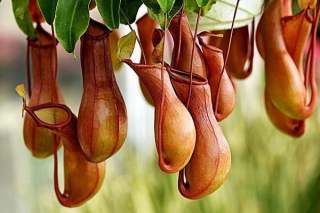
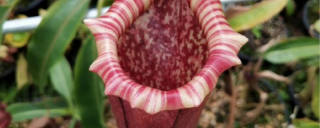
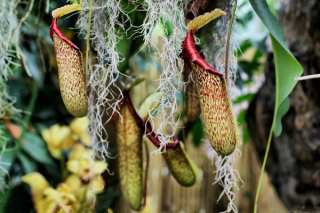
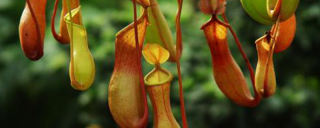
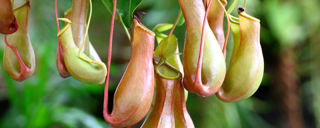
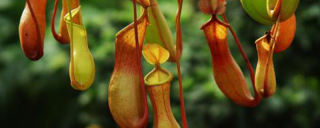
These differing climates have driven distinct morphological adaptations. Highland Nepenthes often exhibit sturdier, sometimes more compact growth. Their pitchers are frequently more colorful and pronounced, which may be an adaptation to attract insect prey in lower-light conditions where visual cues are crucial. The peristome (the slippery, ribbed rim of the pitcher) is often exceptionally developed. Lowland species, facing intense heat and potential dehydration, may have thicker or waxier leaves to reduce water loss. Their pitchers can be larger and more voluminous to capture a greater quantity of prey, supporting faster growth rates in the energy-rich lowland environment. The tendrils that support the pitchers are also critical; in highland species, they may be more robust to withstand stronger winds and cooler temperatures.
The physiological demands of Highland and Lowland Nepenthes are fundamentally different, primarily concerning temperature regulation. Highland species have adapted their cellular metabolism to function optimally in cooler conditions. A sustained period of high temperatures, especially warm nights, is often detrimental and can lead to slowed growth, pitcher abortion, and eventual plant death. This requirement for a significant diurnal temperature fluctuation is a key physiological constraint. Lowland species, however, operate best with steady, warm temperatures. Their metabolic processes are fine-tuned for this heat, and they are highly susceptible to cold stress. Even brief exposure to temperatures below 15°C (59°F) can cause severe damage. Furthermore, the rate of photosynthesis and nutrient uptake from prey is generally faster in Lowland species due to the higher energy environment.
Understanding these botanical differences is paramount for successful cultivation. Replicating the native climate is essential. Growing Highland Nepenthes requires a cooling system or a naturally cool environment to provide the vital day-night temperature drop. High humidity and strong, but often diffused, light are also necessary. They are generally considered more challenging for growers in warm climates. Lowland Nepenthes are less demanding regarding temperature fluctuation but require consistently warm conditions and very high humidity. They often thrive in standard heated terrariums or warm greenhouses. For both types, the substrate must be acidic, low in nutrients, and extremely well-draining, mimicking the impoverished soils of their natural habitats.