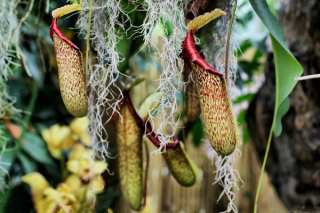
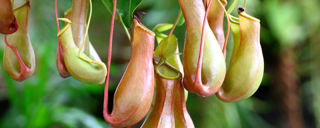
Greetings from the bog! We, the pitcher plants of the United States (primarily the Sarracenia and Darlingtonia families), are thrilled you've invited us into your home. However, our needs are quite specific, having evolved in unique, challenging environments. To help us thrive and avoid becoming a sad, wilted statistic, here are the most common mistakes our new caregivers make, from our perspective.
This is the number one killer. Our roots are incredibly sensitive to minerals and nutrients found in standard potting soil, fertilizer, and even tap water. These substances will burn our roots and lead to a swift demise. We have evolved in nutrient-poor bogs and acidic seeps, acquiring all our nutrients from the insects we trap. We require a specific, nutrient-free growing medium. A mix of long-fiber sphagnum moss and perlite (rinsed thoroughly to remove dust) is perfect. It provides the acidity, moisture retention, and drainage we crave. Most importantly, you must water us only with rainwater, distilled water, or reverse osmosis water. Think of tap water as poison to our root systems.
We are sun worshippers! In our native habitats, we bask in full, direct sunlight for most of the day. A sunny windowsill is often insufficient. Without at least 6-8 hours of direct, bright light, we become weak, leggy, and lose our vibrant colors. Our pitchers may fail to develop properly or remain small and green instead of turning deep red or purple. We need this intense light to photosynthesize and produce the energy required to create our complex trapping mechanisms. For many owners, a south-facing window is the minimum, but we often do best outdoors during the growing season or under strong, dedicated grow lights if kept inside.
We appreciate the thought, but please, do not feed us hamburger, chicken, or fertilizer. Our pitchers are finely tuned to digest small, live insects. Larger pieces of meat or human food will rot inside the pitcher, causing it to blacken, die, and potentially introducing harmful fungi or bacteria that can spread to the rest of the plant. We are perfectly capable of catching our own food. If you feel you must supplement our diet (for instance, if we are kept in a sealed terrarium), a single, small insect like a fly or bloodworm per pitcher every few weeks is more than enough. Overfeeding is far more dangerous than underfeeding.
We are perennial plants, and we require a winter rest period, or dormancy, to survive long-term. As the days shorten and temperatures drop, we will stop growing and some of our pitchers will naturally turn brown and die back. This is not a sign that we are dead! It is a vital part of our life cycle. A common mistake is to continue watering heavily and provide artificial light, trying to force us to grow year-round. This will exhaust us and lead to a weak plant that dies after a year or two. We need a cool (but not freezing) period of 3-4 months with reduced light and less moisture (keeping the soil just damp, not soggy). This rest allows us to store energy for a vigorous return in the spring.
We understand that a browning pitcher is not the most aesthetically pleasing sight. However, as a pitcher dies back, we are reabsorbing nutrients from it. If you cut it off while it still has green parts, you are robbing us of those valuable resources. Please only trim a pitcher once it is completely brown and crispy, cutting it back to the base. Furthermore, do not cut off the flower stalks until they have completely dried out after blooming. The energy from the stalk is also reclaimed by the rhizome underground. Patience with our natural life cycle is key to our health.