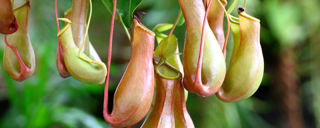
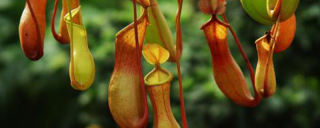
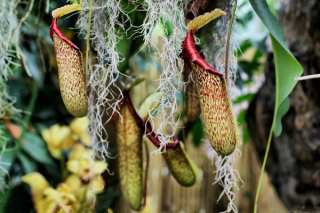
From my perspective as a pitcher plant, my pitchers are not mere decorative vases; they are sophisticated, evolved traps for securing nutrients. I typically grow in environments where the soil is very poor in nitrogen and phosphorus. Therefore, I cannot rely on my roots alone to sustain me. My pitchers are modified leaves, carefully shaped to attract, capture, and digest insects and other small prey. The liquid inside is not just water; it is a special digestive fluid that I secrete. This fluid contains enzymes and other compounds that break down the prey, allowing me to absorb the essential nutrients I need to thrive. The ability to hold this fluid is fundamental to my survival.
You must understand that each of my pitchers has a finite lifespan. It is perfectly normal for an older pitcher to begin browning, drying out, and losing its fluid. This is a natural part of my growth cycle. As I produce new, vibrant pitchers from the center of my rosette, the older, outer pitchers will naturally senesce and die back. This is not a sign of distress but a sign of healthy growth and renewal. Your concern should be focused on whether I am consistently producing new pitchers to replace the old ones. If new pitchers are also failing to hold liquid, then the issue lies elsewhere.
My well-being is intimately tied to the humidity of my surroundings. In my native habitat, the air is often moist. The digestive fluid in my pitchers can evaporate, especially if the air around me is too dry. If the humidity in your home is low, perhaps due to air conditioning or heating, the water in my pitchers can disappear faster than I can replenish it. This leaves the pitchers dry and ineffective. I am not a desert plant; I am a denizen of bogs and tropical highlands. Maintaining adequate humidity around me is crucial for ensuring my pitchers can maintain their internal fluid levels.
How you water me is of utmost importance. I am extremely sensitive to the minerals found in tap water, such as chlorine, fluoride, and salts. These minerals can build up in my soil and, more critically, can directly damage my sensitive pitcher tissues. If you pour tap water directly into my pitchers, or if the water I absorb through my roots is full of minerals, it can "burn" the delicate interior of the pitcher, damaging the cells responsible for producing and holding the digestive fluid. This can cause the pitcher to wither and die prematurely. I require pure water, such as rainwater, distilled water, or reverse osmosis water, for both watering my soil and for occasionally refilling my pitchers if they become dry due to evaporation.
I can experience stress from my growing conditions, which directly affects my ability to form and maintain healthy pitchers. Insufficient light is a primary cause of stress. I need abundant, bright, indirect light to produce the energy required to create and fill these complex structures. Without enough light, my pitchers may be small, weak, or may not form properly at all. Additionally, a sudden change in my environment, such as being moved to a new location, experiencing a draft, or a significant temperature fluctuation, can shock my system. When I am stressed, my priority is survival, not maintaining non-essential functions. I may abort the development of new pitchers or allow existing ones to dry up as I redirect my energy to my core tissues.