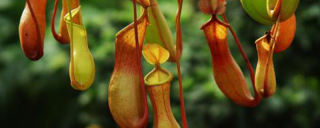
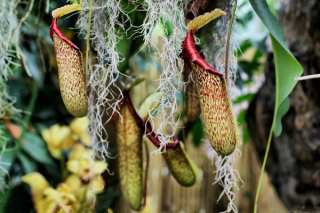
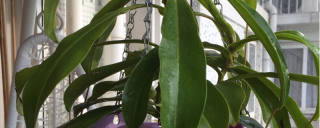
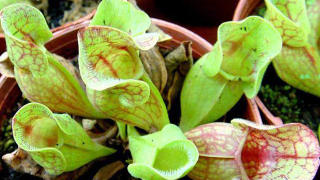
For the dedicated indoor gardener, providing the right light for carnivorous plants like pitcher plants (Nepenthes, Sarracenia, etc.) is the single most important factor for success. From the plant's perspective, light is not just a source of energy; it is the primary driver of its growth, coloration, and most importantly, the development of its iconic pitfall traps. Understanding their specific needs is key to choosing the best artificial light.
To a pitcher plant, light is food. It doesn't see "brightness" as humans do; it perceives photons within a specific wavelength range known as Photosynthetically Active Radiation (PAR), which spans from 400 to 700 nanometers. The goal of any grow light should be to deliver a high intensity of PAR. While a sunny windowsill might provide enough light for survival, robust growth and pitcher production require much more. Insufficient light is the most common reason for a pitcher plant failing to produce its characteristic traps. The plant will prioritize basic survival (leaf growth) over the energetically expensive process of forming pitchers.
The sun provides a full, broad spectrum of light. While plants use the full PAR range, they rely most heavily on the blue and red wavelengths. Blue light (around 400-500nm) is crucial for promoting strong, compact vegetative growth and healthy leaf development. Red light (around 600-700nm) is essential for driving photosynthesis and can influence flowering. For a pitcher plant, a balanced spectrum that includes both blue and red is ideal. This balanced "full-spectrum" or "broad-spectrum" light encourages not only vigorous growth but also enhances the development of anthocyanin pigments, leading to the beautiful red and purple blushes on the leaves and pitchers that many growers cherish.
Intensity, measured as Photosynthetic Photon Flux Density (PPFD) in micromoles per square meter per second (µmol/m²/s), is critical. A pitcher plant requires a PPFD of at least 200-250 µmol/m²/s for decent growth, but truly thriving plants, especially highland Nepenthes and all Sarracenia, will benefit from intensities between 300-400 µmol/m²/s or even higher. To put this in perspective, this is significantly brighter than a typical office or living room. The duration, or photoperiod, should mimic a long summer day. Providing 12 to 14 hours of light per day gives the plant sufficient time to manufacture the energy needed for pitcher formation. A simple timer is an invaluable tool to maintain a consistent cycle.
LED Grow Lights: These are generally the best choice. Modern full-spectrum LED panels are highly efficient, producing intense light with low heat output, which allows them to be placed closer to the plant without causing leaf burn. They can be engineered to provide an ideal spectrum for plant growth. From the plant's perspective, a good LED light delivers a high PPFD of balanced, usable light with minimal wasted energy.
T5HO Fluorescent Lights: These have been a staple for indoor plant growers for years. They provide a good, broad spectrum and sufficient intensity for many pitcher plants, especially younger specimens or less demanding lowland Nepenthes. Their main drawback is that the light intensity drops off significantly towards the ends of the tubes, and they produce more heat than LEDs, requiring careful placement.
Other Lights (Incandescent/Halogen): These are unsuitable. They are extremely inefficient, converting most of their energy into heat rather than usable PAR. The spectrum is heavily skewed towards far-red and infrared, which promotes weak, leggy growth—the exact opposite of what a sun-loving pitcher plant needs.