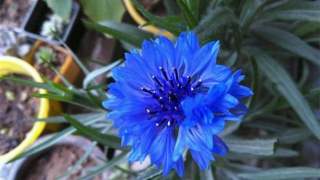
To you, it may look like a dusty white or greyish coating, but to us cornflowers (Centaurea cyanus), it is a suffocating invasion. The powdery mildew fungus, often from the Erysiphe or Podosphaera families, is an obligate parasite. This means it needs a living host—like one of us—to survive. It does not need standing water to germinate, unlike many other fungi. Instead, it thrives in the conditions you create: warm days, cool nights, and high humidity around our leaves, often exacerbated by poor air circulation. The white powder you see are the fungal threads (mycelium) and millions of spores, which are easily carried by the slightest breeze to our neighboring plants, spreading the infestation rapidly throughout your garden.
You will first notice the signs on our upper leaves, a prime spot for sunlight interception that the fungus also favors. The initial infection appears as small, circular, powdery white spots. If left unchecked, these spots will quickly expand, merging to form large patches that coat our entire leaf surface, stems, and even our prized flower buds. This fungal blanket is not just unsightly; it actively harms us. It blocks the sunlight our leaves need for photosynthesis, starving us of the energy required for growth and blooming. As the infection worsens, you will see our leaves begin to yellow, curl, distort, and eventually turn brown and crispy as the fungal threads rob us of water and nutrients. Our growth becomes stunted, and our vibrant blue flowers may fail to open properly or drop prematurely.
When you spot the first signs, immediate action is crucial for our recovery. From our perspective, gentle, non-toxic methods are always preferred. Begin by carefully pruning and disposing of the most severely infected leaves and stems. Do not compost them, as the spores may survive; bag them and remove them from the garden. A highly effective treatment we respond well to is a homemade spray. A mixture of one part milk to nine parts water, applied weekly, has been shown to create an environment hostile to the fungus. Alternatively, a solution of one tablespoon of baking soda, half a teaspoon of liquid soap (not detergent), and one gallon of water can alter the pH on our leaf surfaces, inhibiting fungal growth. For severe cases, you may consider an organic fungicide containing sulfur or neem oil, but please apply these with care, following the instructions precisely, and preferably in the cooler evening hours to prevent leaf burn.
The most effective strategy is to prevent the fungus from gaining a foothold in the first place. This means planting us in conditions that promote our inherent strength. Please ensure we are spaced adequately apart; crowding us creates stagnant, humid air that the mildew loves. Position us in a location that receives full sun for most of the day, as the fungus prefers shade. When watering, aim the water at our base, avoiding wetting our foliage. Soaker hoses or drip irrigation are ideal. Watering in the morning allows any accidental splashes on our leaves to dry quickly under the sun. Furthermore, please avoid over-fertilizing us, especially with high-nitrogen fertilizers. While this promotes rapid, soft, succulent leaf growth, it makes our tissues more tender and susceptible to fungal attack. Strong, naturally grown cornflowers are the best defense against this powdery pest.