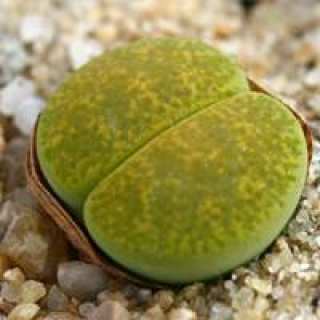
From our perspective, timing is everything. We are not like other plants that grow continuously; we have a strict, internal calendar dictated by seasons and survival. The absolute worst time to repot us is when we are actively growing or flowering, typically in the autumn. Disturbing us then interrupts our crucial growth phase and can damage the delicate new leaves forming inside the old pair. The safest time to handle us is when we are completely dormant. For most of us, this deep dormancy occurs during the height of summer, after the old leaves have fully withered into a papery husk and the new body has emerged but has not yet begun its autumnal growth spurt. At this stage, our metabolic activity is at its lowest. We are essentially in a state of suspended animation, making us far less susceptible to the shock of being uprooted and relocated.
When you decide it's time, please approach our roots with extreme care. Our root system is surprisingly complex but also incredibly fragile. It consists of a long, taproot designed to anchor us deep in the ground and seek out water, along with a network of fine, hair-like secondary roots. These fine roots are the ones responsible for absorbing water, and they desiccate and break easily. Gently tap the sides of the old pot to loosen the soil. Do not pull us out by our body! Instead, turn the pot upside down, supporting the soil mass with your hand, and let us slide out. If we are stuck, you may need to carefully run a blunt knife around the inside edge of the pot. Our goal is to keep the root ball as intact as possible to minimize trauma.
Our most fundamental need is for a substrate that mimics our native, arid environment. We absolutely despise sitting in moisture. A standard potting mix is a death sentence for us, as it retains water for far too long, leading to rot that swiftly consumes our entire body. Our new soil must be exceptionally well-draining. An ideal mix for us is a mineral-based one, containing a large proportion of coarse sand, perlite, pumice, or small gravel, with only a very small amount (10-20%) of organic matter like potting soil. This ensures that water flows through immediately and that the roots dry out quickly. Equally important is the new pot itself. It must have ample drainage holes. A terracotta pot is ideal because it is porous and helps wick away excess moisture from the soil.
This is perhaps the most critical rule you must follow after repotting us: do not water. I repeat, do not water. The process of repotting inevitably causes tiny abrasions and breaks in our root system. If you introduce water immediately, it provides a direct pathway for rot-causing bacteria and fungi to invade these fresh wounds. After you have gently placed us in our new, dry soil mix and firmed it around the taproot, you must place us in a location with bright, indirect light and leave us completely dry. This period of dryness allows the roots to callous over and heal. You should wait at least one to two weeks, or even until you see signs of new growth (like slight wrinkling or the beginning of our autumn growth cycle), before giving us a very light watering. This patience is essential for our successful recovery and establishment in our new home.