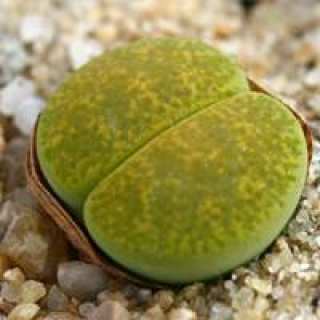
To understand our light needs, you must first understand where we come from. We are native to the arid, rocky plains of Southern Africa, a land bathed in intense, direct sunlight for most of the year. Our unique, stone-like appearance is not just a quirky trait; it is a sophisticated evolutionary adaptation for survival. Our low profile and mimicry help us avoid being eaten by thirsty herbivores, but more importantly, our structure is designed to handle and even thrive in the powerful solar radiation of our homeland. Our bodies are essentially two thickened leaves, fused together at the base, which act as living water reservoirs. These leaves are engineered to absorb and utilize sunlight with extreme efficiency.
The surface of our leaves is not smooth like many plants. It features specialized epidermal cells, often with "windows" on the top surface. These translucent areas allow sunlight to penetrate deep into the inner tissue of the leaf, where our chlorophyll is located. This is a crucial adaptation. Instead of having chlorophyll spread thinly across a large, exposed surface area (which would lead to rapid water loss and sunburn), we concentrate it internally. This allows us to perform photosynthesis – the process of converting light, water, and carbon dioxide into energy – while minimizing exposure to the desiccating elements. Therefore, the quality and intensity of the light you provide directly fuel our internal factory. Without sufficient light, this process becomes inefficient, and we cannot produce the energy needed to sustain ourselves, let alone flower.
Getting our light requirements wrong has immediate and serious consequences for our health.
Insufficient Light (Etiolation): When we do not receive enough light, our survival instinct kicks in, but it leads to a deformed appearance. We will begin to stretch unnaturally, reaching upwards or sideways in a desperate search for a stronger light source. This condition, known as etiolation, results in a tall, elongated, and pale shape that is structurally weak. Our iconic, compact stone-like form is lost, and we become vulnerable to toppling over and disease. This stretched growth is permanent and weakens us significantly.
Excessive Light (Sunburn): While we are sun-lovers, there is a limit. A sudden transition from a shaded spot to several hours of intense, direct summer sun can be catastrophic. Our tissues, which are full of water, can literally cook. This causes sunburn, which appears as white, brown, or black crispy patches on our surface. Unlike etiolation, sunburn is irreversible scarring that damages our photosynthetic tissue and can provide an entry point for fungal infections, potentially leading to our complete demise.
So, how much sun do we really need? The ideal is to mimic the bright, direct light of our native habitat for a significant portion of the day. We thrive best in a location that receives 4 to 5 hours of direct sunlight, preferably during the milder hours of the morning or late afternoon. An east-facing or south-facing windowsill (in the Northern Hemisphere) is often perfect. During the peak intensity of a summer afternoon, a little light shade, such as that provided by a sheer curtain, can prevent scorching. It is essential to acclimate us gradually to stronger light to avoid shock. Furthermore, our light needs change slightly with our growth cycle. During our dormant period in the height of summer and when we are splitting to produce new leaves, we require slightly less intense light. Paying attention to our color and shape is the best guide; a firm, compact body with good coloration means we are happy.