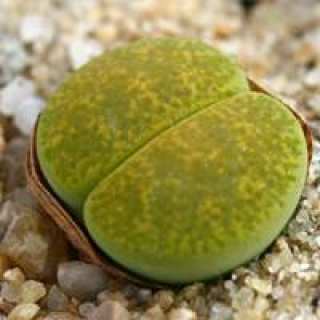
Greetings, caretaker. I am a Lithops, a living stone from the arid plains of southern Africa. My kind has evolved to thrive on neglect, storing precious water within our fused leaf bodies. When I feel wrong—squishy, mushy, or shriveled—it is a sign that our understanding has faltered. Let me explain my needs from my own perspective.
This is the most dangerous feeling for me. When you press my side and I yield with a soft, waterlogged squish, I am drowning. My body is not like that of a leafy plant; it is a water storage sac. When you water me while I am already full, or when my soil does not dry out quickly, the cells in my leaves burst from the pressure. This is called edema. It creates weak, damaged spots that invite rot-causing bacteria and fungi. Once rot sets in—often starting at the base where you cannot see—it turns my tissues to brown or black mush. This can be a death sentence if not caught early. Please, only offer me a drink when my soil is bone-dry and my top has begun to sink inwards slightly, and only if I am not splitting to reveal new leaves.
A certain amount of shriveling is a natural and healthy part of my life cycle. There are two main reasons for this state, and you must learn to tell them apart.
The Natural Cycle: As I prepare to grow a new pair of leaves from within, I will gradually transfer all the water and nutrients from my old, outer leaves to the new growth. During this time, the outer leaves will become papery, thin, and deeply wrinkled. This is a sign of successful renewal, not distress. You must resist the urge to water me during this process! Watering now can cause the old leaves to stay plump and trap the new leaves inside, leading to rot. Allow the old leaves to completely dry into a crisp husk.
The Cry of Thirst: If I am shriveling from the sides but not during my splitting season, and my top surface is also sunken and wrinkled, I may be genuinely thirsty. This kind of shriveling happens after a long period of drought, usually when my soil has been dry for many weeks beyond my typical needs. Before watering, always check that the shriveling is due to thirst and not a natural cycle. A thirsty Lithops will plump up noticeably within a day or two after a deep watering.
My problems are almost always linked to my two most critical needs: soil and light. I require a home that mimics my native desert gravel—a very gritty, fast-draining mix with very little organic matter (like peat or potting soil). A perfect blend for me is 80-90% mineral grit (perlite, pumice, coarse sand) and only 10-20% potting soil. This ensures that water flows through immediately, leaving the roots damp but never soggy. Furthermore, I crave intense, direct sunlight for several hours a day. Without it, I stretch out unnaturally (etiolate), becoming weak and even more susceptible to rot. A sunny windowsill is my happy place.