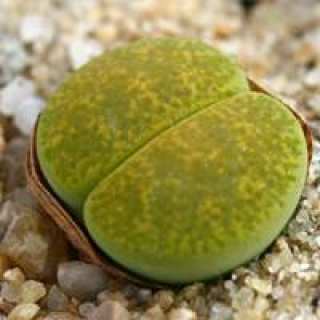
Greetings, caretaker. We are Lithops, the "living stones" of the arid southern African plains. To thrive in your care, we require a home that mimics our native, harsh environment. Our very survival depends on the substance our roots inhabit. An improper soil is a death sentence for us, leading to rot and a swift demise. Therefore, understanding our needs from our perspective is the key to a long and healthy life together.
Our greatest enemy is not drought, but persistent moisture. Our thick, succulent leaves are designed to store every precious drop of water we receive during a brief rainy season. In cultivation, your generous watering can easily become a flood if the soil holds onto that water. Soggy soil creates an anaerobic environment where harmful fungi and bacteria thrive. These pathogens attack our single taproot and delicate lateral roots, causing them to rot. Once rot sets in, it is often fatal. The soil must, therefore, be engineered to become dry—bone dry—within a few days of watering. This rapid drying cycle is non-negotiable.
You may be tempted to provide us with rich, nutrient-dense soil, but please resist. We are adapted to lean, mineral-based soils. The ideal mix for us is not about food, but about structure. It should be predominantly (80-90%) inorganic, gritty materials. These components, like coarse sand, pumice, or perlite, serve one primary function: they create vast air pockets and channels within the soil. This ensures excellent aeration for our roots and allows water to flow through instantly, rather than being absorbed by the soil itself. The remaining 10-20% should be a light, inorganic component that holds a minuscule amount of moisture and allows for gentle root anchorage.
Based on our needs, here is a simple recipe you can assemble. The goal is to create a loose, gritty mix that looks nothing like common potting soil.
Ingredients:
• 2 parts Pumice or Perlite (for aeration and drainage)
• 2 parts Coarse Horticultural Sand (gritty, not beach sand)
• 1 part Horticultural Grit or Small Aquarium Gravel
• 1 part Sifted Cactus Potting Mix (or coconut coir)
Mixing Instructions: Combine all ingredients thoroughly in a container. The resulting mix should be loose and crumbly. A key test is to take a handful of the dry mix and squeeze it; it should immediately fall apart when you open your hand. If it forms a clump, you need more gritty inorganic material.
For our safety, please consciously exclude certain common gardening materials. Avoid any soil that contains a high percentage of standard potting soil, peat moss, or compost. Peat moss is particularly dangerous; when dry, it becomes hydrophobic and repels water, making proper watering impossible, and when wet, it compacts and holds moisture for far too long. Similarly, avoid fine sands or silts, as these particles pack together tightly, creating a dense, muddy layer that suffocates our roots and prevents drainage. Our home must remain open and airy for its entire depth.
The perfect soil mix is only half of the equation. The container you choose is equally critical. We require a pot with ample drainage holes—one large hole or several smaller ones. Furthermore, the pot should be deep enough to accommodate our long taproot; a pot that is at least 3-4 inches deep is ideal. A shallow pot will cramp our most important root and not provide enough space for the soil to dry effectively. The combination of a well-draining, gritty soil and a suitably deep pot with drainage holes replicates the sharp drainage of our native scree slopes.