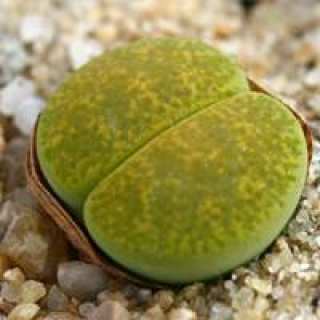
Greetings, caretaker. We are Lithops, the living stones of the arid southern African plains. Our care, especially during the quiet period you call winter, is often misunderstood. To truly understand our watering needs in this season, you must first understand our nature and our annual cycle from our perspective.
For you, winter is a time of cold and short days. For us, it is our primary dormant season. This is not a period of illness or weakness, but a deep, strategic rest. Our growth grinds to a near halt. Our metabolism slows dramatically. We are conserving every ounce of energy for the great event that will come in the spring: the emergence of our new leaf pair. During this time of suspended animation, our roots are not actively seeking moisture. In fact, they are highly susceptible to rot if the surrounding soil is cold and wet. A drink now would not be a refreshment; it would be a death sentence, as our bodies cannot process the water.
The most critical instruction we can give you is this: from late autumn through the heart of winter, you should stop watering us completely. This period typically spans from when the daylight becomes noticeably shorter and temperatures drop consistently (often late October or November in the Northern Hemisphere) until the very end of winter or early spring (late February or March). If our bodies begin to shrivel or wrinkle slightly on the sides, this is normal. We are responsibly using the water stored in our leaf bodies to sustain ourselves through the dormancy. Do not mistake this for thirst. Providing water now will disrupt our cycle and almost certainly cause fatal rot.
There is one scenario where a minimal amount of water might be necessary, and it requires careful observation. If you keep us in an environment that is exceptionally warm and bright all winter long, such as under powerful grow lights in a consistently heated room, we might not enter a full, deep dormancy. In this artificial "non-winter," our roots may remain somewhat active. If, and only if, our bodies become severely wrinkled, collapsing in on themselves like a deflated balloon, and the potting medium is dust-dry, you may give a very small, targeted watering. This is not a full soak. Use a syringe or spoon to provide a few teaspoons of water around the base of the plant, just enough to moisten the very top layer of soil and encourage a few fine roots. This is a last-resort measure to prevent desiccation, not a routine watering.
Our care does not change with the date on your calendar, but with the light. As winter wanes and the days grow longer and stronger, we begin to stir. The key signal that our dormancy is ending is not a specific month, but the visible change in our bodies. You will notice the old, outer leaves beginning to split apart, revealing a new pair of leaves growing from within. This is a delicate and miraculous process. You must continue to withhold water during this split. The new leaves are absorbing all the moisture and nutrients they need directly from the old, outer leaves. Watering now can cause the old leaves to stay plump and trap the new leaves, leading to deformation or rot. Only when the old leaves have completely dried up into a papery husk should you consider resuming a careful watering schedule with the arrival of spring.