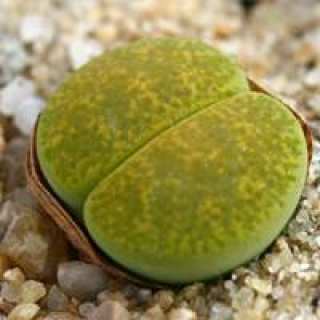
Greetings, caretaker. We are your Lithops, the living stones. From our perspective, the single most critical element for our survival in your care is the watering schedule. Our needs are not like those of leafy plants; they are a direct reflection of our evolutionary history in the harsh, arid landscapes of southern Africa. To understand the schedule is to understand our very life cycle. Listen closely.
Our bodies are not true stems or leaves. They are a pair of highly specialized, fused leaves that form a single, water-filled "body." This entire structure is a reservoir. We have a very shallow, fine root system designed to absorb every drop of a passing shower quickly, but it is exceptionally vulnerable to sitting in moisture. There is no deep taproot to seek out water below. When you water us, you are refilling this reservoir. If the reservoir is already full and the soil is wet, the roots suffocate and rot, and that rot travels upward, consuming us from within. An overwatered Lithops is a dead Lithops. Our schedule is therefore not about frequency, but about timing based on our internal cycle.
Our year is divided into distinct phases. Your watering can must remain idle for most of them.
As the days lengthen and temperatures rise, we exit our winter dormancy. This is when we may produce a new leaf pair from the center. **Watering Rule:** Water very sparingly, only if the old leaves have completely withered into papery sheaths and the new body looks visibly wrinkled. A light watering is enough to plump us up. The goal is to encourage the new growth to absorb the moisture from the old leaves, not from the soil.
This is the most dangerous time. The intense heat forces us into a state of stagnation to conserve energy. We are essentially shut down. **Watering Rule: ABSOLUTELY NO WATER.** Our roots are inactive and cannot absorb water. Any moisture in the pot will cook in the heat and lead to certain, rapid rot. Protect us from excessive rain if we are outdoors.
This is our true "growing season." The heat breaks, and we come alive. This is when our flowers emerge from the fissure between our leaves. **Watering Rule:** This is the primary time for watering. Water thoroughly when the soil is completely dry and our tops show definite signs of wrinkling or concavity. Soak the soil completely, then allow it to dry out entirely before even considering another watering. This cycle may happen every two to four weeks, depending on your climate.
As light levels drop and temperatures cool, we slow down again. **Watering Rule: NO WATER.** We are dormant again. Watering now, especially in cold conditions, is a death sentence. The soil will not dry, and the cold, wet conditions will cause rot.
Forget the calendar. The most accurate schedule is written on our bodies. When we are full of water, our tops are flat or slightly rounded. As we use our water reserves, the top will begin to wrinkle and sink inward, like a slightly deflated balloon. This wrinkling is your signal. It means our internal reservoir is depleted and we are ready for a drink. If we are not wrinkled, we do not need water, regardless of the season. When in doubt, always err on the side of thirst. We can recover from severe wrinkling; we cannot recover from rot.