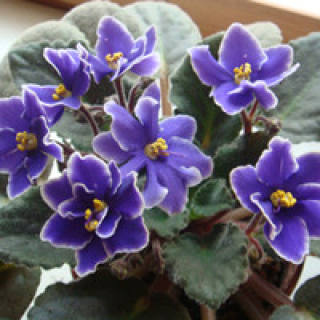
From our perspective as African Violets (Saintpaulia spp.), the concept of "best window exposure" is not about a cardinal direction like North or East in absolute terms, but about the quality and duration of light we receive. Our leaves are adapted to the dappled sunlight of the forest floor in our native East Africa. Direct, harsh sunlight is our adversary. It scorches our delicate, fuzzy leaves, leaving behind unsightly brown or yellow spots that cannot heal. This damage reduces our surface area for photosynthesis, weakening us over time. Therefore, the best exposure is one that provides a long period of bright, but completely indirect, light. We thrive on light that is gentle yet abundant, like a brightly lit room where the sun's rays never directly touch our foliage.
Each window direction offers a different light environment, and our preference is clear. An East-facing window is often ideal. It provides us with several hours of the gentle, cool morning sun. This light is strong enough to fuel our photosynthetic processes and encourage blooming without the intense heat that causes stress and leaf burn. The light diminishes in the afternoon, giving us a rest period. A North-facing window provides consistent, cool, indirect light all day. This is a very safe option, especially in hotter climates, as it virtually eliminates the risk of sunburn. However, in regions with weaker winter light, it might not provide sufficient intensity to promote prolific flowering.
We are wary of West-facing windows. The afternoon sun is intense and hot. Even if we are not in the direct path of the rays, the accumulated heat can be damaging. Placing us in a west window often requires a protective barrier, like a sheer curtain, to diffuse the strong light. A South-facing window is the most dangerous for us. It receives the strongest, most direct light for the longest duration throughout the day. Unfiltered exposure here will almost certainly lead to severe leaf scorch. If this is the only option, we must be placed several feet away from the window or shielded by a semi-sheer curtain at all times.
We communicate our comfort level through our leaves, and an attentive caretaker can learn to read these signals. When the light is perfect, our leaves will appear a healthy, uniform medium green. The plant will have a compact, symmetrical rosette shape, and new leaves will emerge steadily. Most importantly, we will produce abundant flower buds. If the light is too low, our stems will become elongated and leggy as we stretch desperately towards the light source. The leaves may turn a dark green, and flowering will cease entirely, as we lack the energy to reproduce.
Conversely, if the light is too strong, you will see clear warning signs. The leaves will turn pale green or yellowish. The most definitive sign is sunburn: crispy, brown, sunken spots on the leaves, particularly on the side facing the window. The leaves may also feel unusually warm to the touch and the growth may become stunted. If you see these signs, we need to be moved to a shadier location immediately.
Our light needs are not static throughout the year. The sun's angle and intensity change with the seasons. In the winter, when the sun is lower in the sky, its rays are weaker. During this time, we can tolerate, and may even benefit from, a location closer to a south or west window to compensate for the shorter days and lower light intensity. Conversely, during the summer, when the sun is high and powerful, we need to be pulled back from east and west windows or provided with additional shading. A simple quarter-turn of our pot every week is also greatly appreciated. This ensures that all sides of our rosette receive equal light, preventing us from growing lopsided as we lean towards the window.