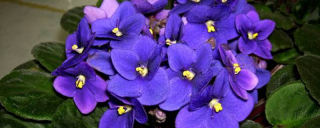
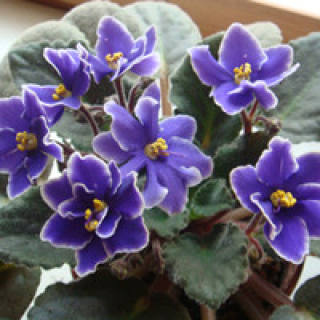
From our perspective as African Violets (*Saintpaulia* spp.), the journey from seed begins not with you, the gardener, but with a successful reproductive event. Our flowers are perfectly designed for pollination. The anthers, which hold the pollen, are clustered tightly around the pistil, the female organ that leads to the ovary. To produce viable seeds, pollen must be transferred from the anthers to the stigma, the tip of the pistil. This can happen naturally through vibrations from visiting insects or, more reliably in your care, through your gentle intervention using a small brush. Once pollinated, the flower will wilt, but the ovary at its base will begin to swell over several weeks, eventually drying into a small, hard seed pod. Inside that pod, our future offspring—the seeds—are developing.
When the seed pod turns brown and hard, it is time for harvest. Our seeds are incredibly tiny, almost like fine dust. This minute size is a survival strategy, allowing us to be dispersed by wind or water in our native cloud forest habitats. However, it presents a significant challenge for cultivation. These seeds contain a tiny embryo and very limited energy reserves. They lack the thick protective coat of many larger seeds and cannot be buried. Their survival depends on landing on a consistently moist surface with access to light for germination. Furthermore, it is crucial to understand that we are highly heterozygous plants. This means that seeds produced by a single plant (self-pollinated) or even two plants of the same cultivar will not produce carbon copies of the parent. The resulting seedlings will be a unique genetic mix, displaying a wide variety of flower colors, forms, and leaf shapes—a delightful surprise, but not a method for replicating a specific named variety.
For us to successfully sprout, we require a very specific microenvironment that mimics the conditions on the forest floor. The growing medium must be sterile, lightweight, and capable of retaining moisture while allowing for excellent aeration. A blend of fine, milled sphagnum moss and perlite is ideal. This medium should be thoroughly moistened before the seeds are sown. Because we are so small and require light to germinate, we must be surface-sown. The best method is to mix the seeds with a fine, dry sand to help distribute them evenly, then gently sprinkle the sand-seed mixture onto the prepared medium. Do not cover us with soil. The container, whether a specialized germination tray or a simple plastic food container with a clear lid, must then be sealed to maintain 100% humidity, creating a miniature greenhouse.
Placed in a warm location (around 70-75°F or 21-24°C) with bright, indirect light, we will begin our journey. In about two to four weeks, you will see the first signs of life: tiny, green specks that will develop into our first seed leaves, or cotyledons. These initial leaves are simple and round, quite different from our characteristic fuzzy, oval adult leaves. During this incredibly vulnerable stage, the sealed environment is our lifeline. It prevents our delicate root hairs from drying out instantly. As true leaves begin to emerge, you can start to gradually acclimate us to lower humidity by slightly cracking the lid of the container for longer periods each day over the course of a week or two.
Once we have developed several sets of true leaves and are acclimated to ambient humidity, we are ready for the first transplant, or "pricking out." This must be done with extreme care. Using a small tool, like a toothpick, gently lift us from the germination medium, holding us by a leaf, not the fragile stem. We can then be spaced out into a fresh tray or small pots filled with a standard, lightweight African Violet potting mix. At this stage, our roots are still delicate, so water from below by placing the pots in a shallow tray of water. It will take many months of consistent care—bright indirect light, even moisture, and gentle fertilizer—before we are mature enough to consider blooming, a process that can take 6 to 9 months from seed.