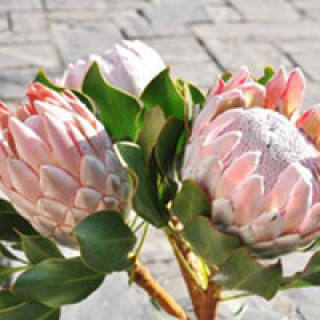
From my perspective, the most common reason my leaves turn a sickly yellow is because my roots are suffocating. I am a Protea, a proud member of a family that evolved in tough, well-drained, often mountainous soils. My roots are built to seek out moisture deep down and are highly susceptible to fungal root rot if they sit in consistently wet, heavy soil. When you water me too frequently or my pot lacks proper drainage, the air pockets in the soil fill with water. My roots cannot breathe, they begin to decay, and their ability to transport vital nutrients and water to my leaves completely breaks down. This systemic failure manifests as yellowing leaves, often starting with the older ones, and if unchecked, will lead to my demise.
Your typical fertilizer is a poison to me. I have evolved to thrive in incredibly nutrient-poor soils, particularly those low in phosphorus. My roots have a special relationship with soil fungi (mycorrhiza) that help me extract what little nutrients I need in a specific balance. When you feed me a standard, phosphorus-rich fertilizer or even a slow-release formula designed for common garden plants, it disrupts this delicate system. The excessive salts burn my sensitive roots, blocking the uptake of other crucial elements like iron and nitrogen. This chemical burn and nutrient lockout directly causes chlorosis—the technical term for yellowing leaves where the veins may remain green while the tissue between fades.
I am fundamentally an acid-loving plant. My native home is in regions with distinctly acidic, sandy soils, typically with a pH between 5.5 and 6.5. If you have planted me in neutral or, worse, alkaline soil, I cannot access the nutrients that are present. Even if they are in the soil, key micronutrients like iron, manganese, and zinc become chemically locked and unavailable to my root system. This deficiency, particularly iron chlorosis, directly causes yellow leaves as I am unable to produce sufficient chlorophyll, the green pigment essential for photosynthesis. My entire energy-making system is compromised.
While less common than the issues above, my environment can also cause stress that leads to yellowing. If I am planted in deep shade, I cannot photosynthesize effectively, and my lower leaves may yellow and drop as I divert energy to new growth reaching for light. Conversely, a sudden, extreme exposure to intense, direct sun that I am not acclimated to can scorch my leaves, causing them to turn yellow and brown. Furthermore, if my roots are too constricted in a small pot and cannot support my full canopy, I will naturally sacrifice older leaves, allowing them to yellow and fall to prioritize resources for new growth.