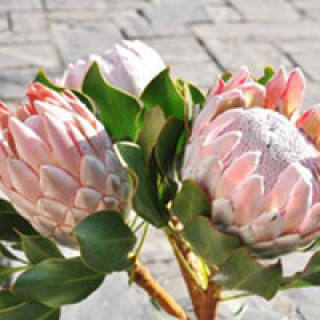
The survival of Protea plants outdoors during winter in the United States is a complex issue, dictated by the fundamental physiological needs of the plant clashing with the climatic realities of most of the country. From the plant's perspective, its survival hinges on a series of non-negotiable environmental conditions.
Proteas are not just from South Africa; they are specifically native to the Cape Floristic Region, a unique ecosystem characterized by a Mediterranean-type climate. This means their entire biological blueprint is engineered for mild, wet winters and warm, dry summers. Their deep, spreading root systems are designed to seek out water in well-drained, acidic, and nutrient-poor soils during the dry season. Their tough, leathery leaves (sclerophyllous) are an adaptation to conserve water. Crucially, they possess no natural physiological adaptations for cold tolerance, such as the ability to supercool their cells or produce antifreeze proteins common in plants from temperate regions.
The single greatest threat to a Protea plant's survival in a US winter is sustained freezing temperatures. While hardiness varies slightly by species, most common Proteas (e.g., Protea cynaroides - King Protea) can only tolerate brief dips to around 25-30°F (-4 to -1°C). Temperatures at or below this threshold, especially if sustained for more than a few hours, cause irreversible damage. Intracellular water freezes, forming ice crystals that rupture cell membranes, leading to blackened, mushy stems and foliage, and ultimately the death of the plant. A hard freeze is a catastrophic event from which the plant cannot recover.
Even if air temperatures remain just above freezing, winter conditions in many parts of the US present a second lethal threat: wet, cold soil. Protea roots are exceptionally susceptible to root rot fungi (e.g., Phytophthora) that thrive in cool, waterlogged conditions. The plant's roots, adapted to arid, well-drained slopes, suffocate and rot in heavy, moisture-retentive clay soils common in many US gardens. Furthermore, high humidity combined with cool temperatures can foster fungal diseases on foliage and blooms, further weakening the plant.
Given these needs, the geographic scope for successful outdoor winter survival is extremely limited. Only USDA Plant Hardiness Zones 9b and above (where average annual extreme minimum temperatures are 25°F to 30°F) offer a marginal chance. This essentially restricts year-round outdoor cultivation to very specific microclimates, primarily in:
* Coastal Southern California: Offers the ideal Mediterranean climate match.
* Parts of Central and South Florida: Must have very well-drained, sandy soil.
* Protected microclimates in Hawaii: Higher elevation slopes provide excellent drainage.
In all other regions, including the humid Southeast, the cold Northeast, and the variable Midwest, winter conditions will almost certainly prove fatal to a Protea plant left outdoors.