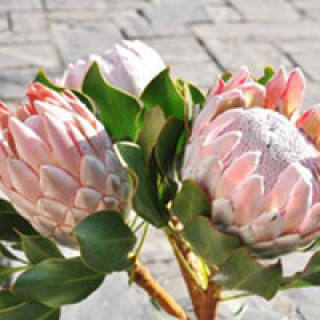
As a Protea, I stand proud with my striking, otherworldly blooms and leathery leaves, a testament to ancient flora. However, my resilience, forged in the tough conditions of the Southern Hemisphere, is often tested in new environments. In the USA, I face adversaries my evolutionary history did not prepare me for. Here are the primary threats from my perspective.
This is my greatest fear. The water mold *Phytophthora cinnamomi* lurks in poorly draining soil, a condition I am utterly ill-adapted to. My roots are designed to seek moisture deep in well-aerated, gritty soils. When water lingers around my crown, this pathogen attacks, rotting my root system. From my point of view, it feels like a slow suffocation. My leaves begin to wilt, yellow, and die back, even when the soil seems moist. I am unable to uptake water or nutrients, and eventually, I collapse and die. This is the most common cause of my demise in gardens with heavy clay soil or overzealous watering.
These tiny insects are a persistent nuisance. Aphids cluster on my tender new growth and the undersides of my leaves, piercing my tissues to suck out my vital sap. This weakens me, stunting my growth and deforming my beautiful new leaves and bracts. To make matters worse, they excrete a sticky substance called honeydew, which attracts sooty mold. This black fungus coats my surfaces, further interfering with my ability to photosynthesize and breathe. Scale insects are equally troublesome, appearing as small, immobile bumps on my stems and leaves, where they also feed on my sap and slowly drain my vigor.
Humid, rainy conditions, especially in parts of the USA like Florida or the Gulf Coast, create a perfect environment for fungal pathogens like *Botrytis cinerea* (grey mold) and various leaf spot fungi. These organisms attack my foliage and flowers. I first notice small, dark spots on my leaves that gradually expand, causing them to yellow and drop prematurely. On my prized flower heads, botrytis appears as a fuzzy grey mould, rotting the blooms I worked so hard to produce. This is especially devastating for my human cultivators who grow me for the cut flower market.
While less common, certain caterpillars find my foliage palatable. They chew irregular holes in my leaves, compromising my photosynthetic factory and leaving me vulnerable. More concerning are root weevil larvae. These grubs live in the soil and feed on my root system, similar to Phytophthora but through physical damage. The adult weevils also emerge to notch the edges of my leaves, which is unsightly but less damaging than their underground offspring. This combined attack from above and below ground is particularly stressful.
Finally, I must mention challenges that are not pests or diseases but weaken me and make me susceptible to them. These include being planted in the wrong soil (anything without perfect drainage), receiving water with high pH (which I cannot tolerate), or being over-fertilized with phosphorus-rich fertilizers, which is toxic to my Proteaceae family roots. When I am stressed by these conditions, my natural defenses are lowered, and I become an easy target for the true pathogens.