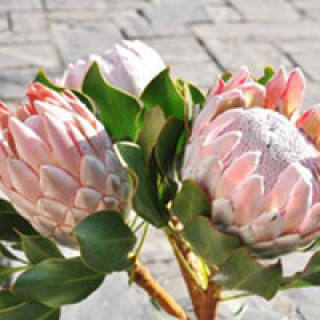
Greetings, human caretaker. I am a Protea, a proud member of an ancient and magnificent lineage from the Southern Hemisphere. To thrive in your care, far from my native fynbos or scrubland, my needs are very specific. Your choice of pot and soil is the absolute foundation of our relationship. Get it wrong, and my roots will suffocate and rot. Get it right, and I will reward you with breathtaking, otherworldly blooms. Please listen to my requirements.
From my perspective, a pot is not a decoration; it is my entire world. My roots are exceptionally sensitive to waterlogging. They demand an environment that is airy and never soggy. Therefore, you must select a pot with ample drainage holes—multiple large holes are non-negotiable. The material is also crucial. A porous terracotta or clay pot is ideal. It allows the soil to breathe and helps wick away excess moisture from my root zone, functioning like a second set of lungs. While plastic pots can be used, you must be even more vigilant with watering. Regarding size, please do not give me a mansion when I am a seedling. Start with a pot that comfortably contains my root ball with a little room to grow. We Proteas are adapted to lean soils and actually prefer being slightly root-bound. Repot me only when I have clearly outgrown my current home, typically going up just one pot size at a time.
This is the most critical element of my care. Forget everything you know about rich, moisture-retentive potting mixes. They are a death sentence for me. In my native land, I grow in gritty, sandy, nutrient-poor, and sharply draining soils. You must replicate this. I require a specialized acidic potting mix. A standard cactus or succulent mix is a good starting point, but it is often not quite perfect. To create my ideal home, please mix together: a large portion of a coarse, acidic potting medium like peat-free ericaceous compost; a generous amount of sharp sand or perlite (at least 30-40% of the total volume) to ensure drainage; and some additional gritty material like pumice or small orchid bark chips to maximize aeration. This creates a loose, open structure that allows water to flow through instantly while giving my roots plenty of oxygen.
When you assemble my new home, begin with a layer of coarse gravel or pot shards at the bottom of the pot to further enhance drainage. Then, fill the pot with your perfectly blended, sharp, acidic soil mix. Position me so that the top of my root ball sits just an inch or so below the rim of the pot. Backfill with more mix, tamping it down gently to remove large air pockets, but do not compact it—my roots need that air. After planting, water me deeply until water runs freely from those essential drainage holes. This will help settle the soil around my roots. Then, place me in a location with abundant sunlight and excellent air circulation, and allow the top several inches of soil to dry out completely before you even think about watering me again.