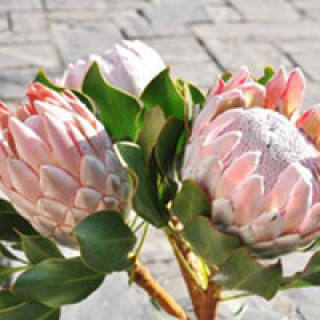
From our roots outward, we Proteaceae family members are fundamentally different from most common garden plants. Our native habitats are in South Africa and Australia, in nutrient-poor, sharply draining soils. Our roots are exceptionally sensitive to waterlogging and phosphorus. Therefore, the single most important rule is: we abhor "wet feet." Overwatering is a far greater and quicker threat to our survival than underwatering. You must provide us with a potting mix that mimics our natural home—a very coarse, acidic, and free-draining blend of bark, perlite, pumice, and very little, if any, standard peat-based potting soil.
Do not water us on a fixed calendar schedule. Instead, you must check our soil moisture directly. Insert your finger into the soil up to the second knuckle (about 2 inches deep). The watering trigger is when this top layer feels completely dry. The pot should also feel noticeably lighter when you lift it. At this point, a deep, thorough watering is required. Water us slowly until you see a generous amount of water flow freely from the drainage holes at the bottom of the pot. This ensures our entire root ball is hydrated. Then, allow all excess water to drain away completely. Never let us sit in a saucer of water.
In these regions, the intense sun and heat will dry out our pot much faster. The "finger test" will likely be needed every 2 to 4 days during the peak summer heat. The sun can bake our container, stressing our roots. To mitigate this, consider placing our pot in a location where we receive afternoon shade or provide light shade cloth. Mulching the top of the soil with a layer of wood chips or gravel helps immensely by keeping the root zone cooler and reducing surface evaporation. Watch for our leaves slightly wilting or curling, a sign we are becoming too dry.
Here, the danger is constant moisture and lack of air circulation around our roots. Humidity slows evaporation dramatically. The frequency of the "finger test" remains crucial, but you may find we need water only once every 7 to 10 days, or even longer during cool, damp periods. It is absolutely critical that our pot is placed in the full sunniest spot available, sheltered from excessive rain if possible (e.g., under an eave or on a covered patio). This maximizes sunlight and warmth to help dry the soil between waterings. In these climates, the quality of the potting mix is our primary lifeline.
Our water needs change drastically with the seasons. During our active growth and flowering period (typically spring and summer), we will be thirstiest. As daylight shortens and temperatures drop in autumn and winter, we significantly slow our growth. During this dormant period, our water requirements drop substantially. You must let the soil dry out even more deeply between waterings, potentially waiting until the pot is quite light. In cold winter climates where we might be moved to a protected garage, water only very sparingly, just enough to prevent our roots from desiccating completely, as we are not actively growing.