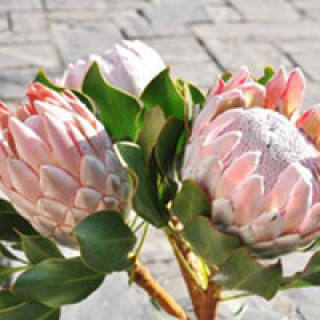
From our perspective as plants, the term "soil" is somewhat misleading for our needs. We Proteaceae, which include Leucospermum, Leucadendron, and Protea species, do not thrive in rich, heavy, water-retentive earth. What we require is an acidic, mineral-based, and exceptionally well-drained growing medium. Our native home is the nutrient-poor, mountainous slopes of South Africa, where water drains instantly and the ground is sour. In your American garden, attempting to plant us in dense clay or compost-enriched soil is a death sentence; our fine, lateral roots will quickly succumb to root rot fungi that flourish in stagnant, moist conditions.
The specific pH level of this medium is critical for our survival and flourishing. We have evolved to absorb nutrients most efficiently in a strongly acidic to slightly acidic environment, with an ideal pH range between 5.0 and 6.0. This acidity is not arbitrary; it governs the chemical availability of nutrients in the medium. At this low pH, certain elements, particularly iron and phosphorus, remain in a soluble form that our specialized proteoid roots can absorb. These dense clusters of short roots are our secret weapon, allowing us to thrive in otherwise impoverished soils.
When the pH rises above 6.0 and becomes neutral or alkaline, a catastrophic lock-out occurs. Iron, a vital element for chlorophyll production and our overall health, becomes insoluble and unavailable to us. You will see this manifest as chlorosis—a yellowing of the leaves, particularly between the veins, while the veins themselves may remain green. This is a sign of profound distress. Furthermore, in alkaline conditions, phosphorus becomes more available, but we are exceptionally sensitive to high levels of phosphorus. It is toxic to us, burning our delicate root systems and preventing the uptake of other crucial micronutrients, ultimately leading to our decline and death.
To make us happy, you must create a raised mound or a dedicated bed. Do not use standard potting soil or garden soil. Instead, construct a custom blend. A perfect mix for us is a large portion of coarse, washed sand or pumice (for drainage), mixed with a smaller amount of acidic potting mix (with no added fertilizers), and a generous amount of decomposed pine bark or peat moss (to acidify the medium). The pine bark will naturally lower the pH over time as it decomposes. It is imperative to test the pH of your prepared bed annually using a reliable test kit. If the pH begins to creep above 6.0, you can gently lower it by applying a soil acidifier, such as elemental sulfur or a fertilizer formulated specifically for acid-loving plants like azaleas and camellias, but always at half strength to avoid shocking our system.