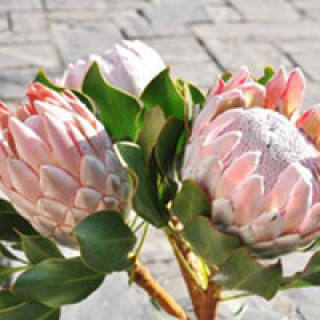
Greetings, caretaker. We are the Proteaceae family, a proud and ancient lineage that includes Proteas, Leucospermums, and Leucadendrons. To thrive in your garden, we require a very specific home—one that mimics our native, nutrient-poor, mountainous slopes. The secret to our success lies almost entirely in the soil. Here is our guide to creating the perfect acidic soil mix from our perspective.
Our roots are highly susceptible to rot and cannot tolerate "wet feet." Standard garden soil, which often becomes compacted and waterlogged, is a death sentence for us. You must build our home from the ground up with a sharply draining, coarse, and open structure. A perfect base mix for our container or raised bed would be a combination of two parts coarse river sand (or horticultural pumice) and one part acidic potting soil or fine pine bark chips. The sand or pumice ensures water flows through instantly, while the bark provides slight moisture retention and begins the process of acidification as it breaks down.
We require intensely acidic soil, with a pH ideally between 5.0 and 5.5. This acidic environment is crucial because it allows our specialized proteoid roots to efficiently access the limited nutrients available in the poor soils we evolved in. To achieve and maintain this, you must incorporate acidic amendments. The most effective and natural method is to mix in a generous amount of peat moss or coir into your base mixture; both are naturally acidic. Furthermore, annually mulching our surface with a thick layer of acidic mulch, such as pine needles or more pine bark, is essential. As this mulch decomposes, it continually leaches mild acids into our root zone, protecting us from the neutral or alkaline conditions we find toxic.
This is the most non-negotiable demand. We are utterly intolerant of phosphorus. Standard fertilizers, composts, and manures are filled with it and will quickly poison us, leading to chlorosis (yellowing leaves) and death. You must ensure that every component of our soil mix is phosphorus-free. Never use regular compost, mushroom compost, or any controlled-release fertilizer not explicitly labeled for "Proteas" or "Australian Natives." When you do feed us, and we require very little, it must be with a specialized fertilizer that is completely free of phosphorus and has a formulation like 3:1:5 or similar.
To truly help us flourish, consider inoculating our new soil with a powdered form of native mycorrhizal fungi. In the wild, we form a symbiotic relationship with these beneficial fungi on our proteoid roots. They dramatically increase our root surface area, allowing us to scavenge for every available nutrient and moisture in our lean soil. Finally, after planting, top our home with a 5-7 cm (2-3 inch) layer of that acidic mulch. This keeps our roots cool, suppresses weeds, and, as it slowly breaks down, provides the minimal, gentle nutrients we are adapted to receive.