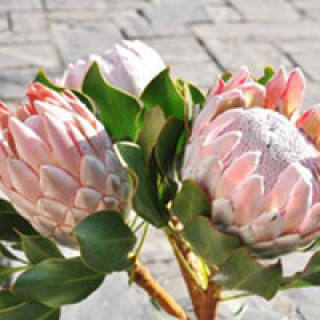
From my perspective as a Protea, pruning is not a punishment but a collaborative effort for us to achieve our best form. I am a woody, evergreen shrub from ancient lineages, and my growth habits are different from many common garden plants. My energy is stored in my sturdy stems and deep, proteoid root system. Pruning at the wrong time or in the wrong way can severely deplete my resources. The optimal time to prune me is immediately after my main flowering period has finished. This is when I am naturally shifting my energy from sustaining blooms to producing new vegetative growth. By pruning at this time, you are working with my natural cycle, directing this new energy into strong, healthy shoots rather than wasting it on developing seeds in spent flower heads.
When you approach me with secateurs, please ensure they are sharp and sterilized. A clean cut is crucial; a ragged, crushing tear is an open invitation for fungal infections and die-back, which I find very difficult to compartmentalize. Do not simply deadhead the old flower by snipping off its head. Instead, locate the point on the stem just above the first strong, healthy leaf node or a side shoot. Make your cut there, at a slight angle away from the bud. This technique encourages the growth point below the cut to burst into life, promoting a bushier, more compact shape. It also removes the unsightly old flower head without leaving a long, dead stump that will inevitably die back towards my main branches.
As I mature, I may require more strategic pruning to maintain a strong framework. My goal is to have an open, vase-like structure that allows sunlight and air to penetrate my center. This reduces humidity around my base and minimizes the risk of fungal diseases. Please identify any weak, spindly, or crossing branches that rub against each other. These should be removed completely, cutting them back to their point of origin or to a main leader branch. Also, look for any older, unproductive wood that has stopped flowering. Cutting a portion of this older wood back to a vigorous side branch will stimulate new, young growth from that point, which will be more floriferous in future seasons.
There are actions that can cause me significant stress and long-term harm. Never "hard prune" me back into old, bare wood that has no visible leaf nodes or buds. I often lack dormant buds on these older sections and may be completely unable to regenerate new growth from that point, leaving me with a dead stump and a lopsided shape. Avoid pruning me in late autumn or winter when I am dormant or growing very slowly; my wounds will not heal effectively, and I will be vulnerable to rot and cold damage. Furthermore, never strip all my foliage from a branch, as my leaves are my energy factories. Without them, the branch will simply die. Always ensure I have plenty of green leaves left to fuel my recovery and new growth after a pruning session.