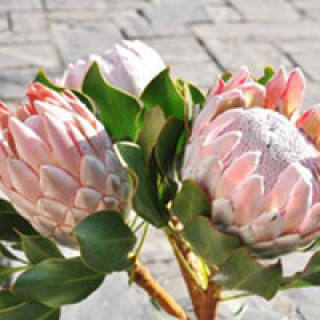
Protea plants, native primarily to South Africa and parts of Australia, are renowned for their spectacular and otherworldly blooms. From a botanical perspective, their temperature tolerance is a direct result of evolutionary adaptation to their specific Mediterranean-type ecosystems, characterized by warm, dry summers and cool, wet winters. Their survival hinges on a delicate balance, and understanding their limits is key to successful cultivation.
For robust growth, flowering, and overall plant health, most Protea species thrive in a specific temperature band. The ideal range for the majority of these plants is between 10°C (50°F) and 27°C (80°F) during their active growth period. This range allows for efficient photosynthesis and metabolic processes without inducing heat or cold stress. Nighttime temperatures that drop significantly, often by 10°C or more from the daytime high, are highly beneficial. This diurnal fluctuation mimics their natural habitat and contributes to stronger, healthier plants and can even enhance flower production and coloration.
Protea plants are well-adapted to handle periods of high heat. Mature, established plants can generally tolerate temperatures up to 40°C (104°F) for short durations, provided two critical environmental conditions are met: excellent air circulation and absolutely dry roots. Their primary defense mechanism against heat is their extensive, fine root system, which seeks out deep water sources, and their tough, leathery leaves (sclerophyllous) that minimize water loss through transpiration. However, prolonged heat above 35°C (95°F), especially when coupled with high humidity or wet soil, can lead to severe root rot (caused by Phytophthora fungi) and fatal heat stress.
The cold tolerance of Proteas is more variable and highly species-dependent. As a general rule, the majority of commonly cultivated species can withstand light frosts and brief periods of cold down to approximately -2°C to -4°C (28°F to 25°F). At these temperatures, some leaf tip burn or damage to new, soft growth may occur, but the plant's woody structure typically survives. It is crucial to distinguish between dry cold and wet cold. A dry, brief frost is far less damaging than a prolonged wet freeze, where icy water around the crown and roots drastically increases the risk of fatal damage. Certain hardy species, such as Protea cryophila (Snow Protea) and some high-altitude Leucadendrons, have evolved to survive temperatures as low as -10°C (14°F) with significant snow cover.
A Protea plant's ability to withstand temperature extremes is not absolute but is heavily influenced by its growing conditions. Key factors include drainage, age, and wind protection. Perfect, sharp drainage is non-negotiable; cold, waterlogged soil is fatal as it suffocates roots and promotes disease. Mature plants with a well-established, deep root system are exponentially more resilient to both heat and cold than young, newly planted specimens. Furthermore, while they appreciate good air flow, protection from harsh, desiccating winter winds can prevent severe windburn and dehydration damage during cold spells, when the plant cannot draw water from the frozen ground.