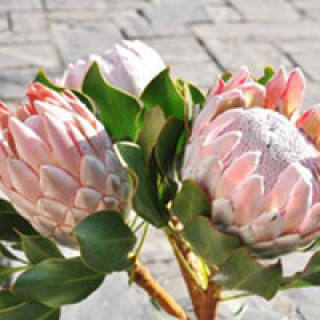
As a member of the Proteaceae family, the Protea plant has evolved over millennia to thrive in a very specific set of conditions, primarily the nutrient-poor, well-draining soils of South Africa and Australia. From our perspective, our entire physiological system is fine-tuned to this low-nutrient environment. Therefore, understanding our fertilizer needs is not about providing abundance but about respecting our evolved sensitivities to prevent harm and encourage our unique, spectacular blooms.
This is the single most critical concept for our caretakers to grasp. Our root systems have developed a highly efficient mechanism for scavenging the minimal amounts of phosphorus available in our native, acidic soils. We lack the fine root hairs common in other plants and instead rely on a dense cluster of non-woody roots called proteoid roots to absorb nutrients. When confronted with high levels of phosphorus, commonly found in standard, balanced fertilizers (e.g., 10-10-10), we cannot regulate its uptake. This leads to a toxic accumulation that burns our roots, severely stunts our growth, and is often fatal. For us, a fertilizer must be specifically formulated to be low in phosphorus.
While we require nitrogen for foliage growth, an excess promotes an imbalance, encouraging an overabundance of soft, weak leaves at the expense of our prized flower production. This lush growth also makes us more susceptible to pests and frost damage. Furthermore, our roots are adapted to acidic soil with a pH between 5.0 and 6.0. Alkaline conditions lock up the limited nutrients we can tolerate, making them unavailable to us. A fertilizer designed for acid-loving plants helps maintain this crucial pH balance and provides nitrogen in a slow-release, gentle form, such as ammonium nitrogen, rather than the harsher nitrate nitrogen.
Having evolved in mineral-rich ancient soils, we have a particular demand for certain trace elements. Iron (Fe) is vital for our chlorophyll production and overall vibrant health. A deficiency, often induced by incorrect soil pH, results in chlorosis—yellowing leaves with green veins. We also benefit from other micronutrients like magnesium (Mg), which is a core component of chlorophyll, and potassium (K), which supports overall plant vigor and flower formation. A fertilizer that includes these micronutrients in a chelated form ensures we can absorb them efficiently.
Our growth strategy is one of slow, steady development, not rapid, forced expansion. We are adapted to subsist on minimal nutrient input. Therefore, a light, infrequent feeding schedule aligns with our natural biology. A single, gentle application of a suitable low-phosphorus fertilizer at the start of our active growing season (typically early spring) is often sufficient to support a full year of growth and flowering. Overzealous feeding, even with an appropriate fertilizer, disrupts our natural rhythm and can cause more harm than good.