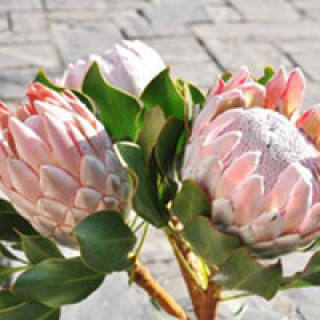
From my perspective as a Protea, water is a constant source of debate. My roots are highly sensitive. If you give me too much water, the soil becomes saturated, pushing out the oxygen my roots desperately need to breathe. This leads to root rot, and my first and most dramatic cry for help is to turn my leaves yellow and soft as my foundational systems begin to fail. Conversely, if I do not receive enough water, I cannot transport essential nutrients from the soil or perform basic photosynthesis. This causes my leaves to become dry, brittle, and yellow as I essentially begin to shut down and conserve my remaining resources. I need deep, infrequent watering that allows my roots to access moisture without being drowned.
I am not like most plants you may be accustomed to. I hail from nutrient-poor, acidic soils with exceptional drainage. If you plant me in heavy, water-retentive clay or standard potting mix, I will struggle immensely. The wrong soil compacts around my roots, exacerbating waterlogging and preventing them from functioning. Furthermore, I am adapted to thrive in acidic conditions. If my soil is too alkaline (has a high pH), I am physically unable to absorb key nutrients like iron, even if they are present in the soil. This iron deficiency, called chlorosis, manifests as bright yellow leaves with green veins, a clear sign I am starving in plain sight.
Please understand that my evolutionary history is in impoverished soils. My root system is specifically designed to extract the minimal nutrients available. Applying standard fertilizers, especially those high in phosphorus, is incredibly harmful to me. Phosphorus is toxic to Proteas in high concentrations; it burns our delicate root systems and blocks the uptake of other crucial elements like nitrogen. This chemical imbalance directly results in yellowing leaves and can ultimately be fatal. I require a specialized, low-phosphorus, slow-release fertilizer formulated for native plants like myself.
Sudden changes in my environment put a great deal of strain on me. If I have been recently transplanted or repotted, I am dedicating immense energy to re-establishing my root system in a new space. During this recovery period, it is not uncommon for me to sacrifice some older leaves, turning them yellow, to focus my limited resources on new root growth. Similarly, if my sun exposure changes drastically—from full sun to shade or vice versa—the resulting stress can cause a yellowing reaction as I struggle to adapt my photosynthetic machinery to the new light conditions.