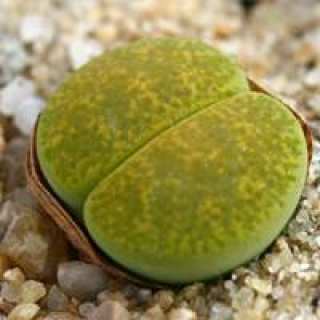
Greetings, caretaker. We, the Lithops, are a resilient but sensitive folk, often called "living stones" for our remarkable camouflage. While our succulent leaves are adapted to store water and survive harsh, dry conditions, this very adaptation makes us susceptible to certain invaders, especially when our environment does not perfectly mimic our native South African deserts. Here is a detailed account of the common adversaries we face in your care within the USA.
This is, by far, our greatest fear. Unlike their foliar cousins, root mealybugs (Rhizoecus spp.) live clandestinely in the soil, feeding on our delicate root systems. From our perspective, the first sign is often a mysterious halt in growth and a slight wrinkling or softening of our bodies that does not improve with watering. You might not see the pests themselves unless you unpot us, revealing white, cottony masses on our roots. They drain our vital sap, stunting our growth and leaving us vulnerable to secondary fungal infections that can swiftly lead to our collapse.
While less common on our low-lying forms, aphids can occasionally become a problem, particularly when we are flowering or have fresh new leaves emerging from our central fissure. They cluster and pierce our tender tissues, excreting sticky honeydew that can attract ants and promote sooty mold. Similarly, spider mites, those minuscule arachnids, thrive in hot, dry conditions. They weave fine silken webs, primarily on the upper parts of our bodies, and their feeding creates a stippled, dull appearance on our normally vibrant epidermis, slowly draining our vitality.
The adult fungus gnat itself is merely a nuisance. The true danger lies in its larval stage. These tiny, translucent worms live in the soil and primarily feed on organic matter and fungi. However, in their search for food, they will not hesitate to chew on our young, delicate root hairs and any small, vulnerable roots. This root damage impairs our ability to take up water and nutrients, causing unexplained decline and providing open wounds through which soil-borne pathogens can enter our system.
We must also speak of rot, which is often a secondary condition triggered by pest damage. When root mealybugs or fungus gnat larvae injure our roots, or when aphids pierce our outer skin, they create entry points for opportunistic fungal pathogens like Pythium or Phytophthora. From our internal view, this is a catastrophic event. The infection causes our water-storing tissues to break down into a mushy, discolored mess. It spreads rapidly from the roots upward or from a wound outward, often proving fatal if not addressed immediately.
It is crucial to understand that the presence of these pests is often a symptom of an environment that does not fully suit our needs. Overwatering, poor air circulation, and the use of organic-rich, moisture-retentive soil create the perfect habitat for many of these adversaries. A proper, gritty, mineral-based soil mix and a strict, cautious watering regimen tailored to our seasonal cycles are our primary defenses. A stressed Lithops is a magnet for trouble.