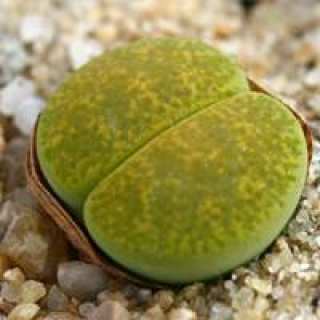
From my perspective as a Lithops, splitting is not a sign of distress but a fundamental part of my life cycle. My body is composed of two fused leaves, which act as a water storage unit. Over the course of a growing season, I photosynthesize and collect resources. A new plant body begins to form internally, drawing moisture and nutrients from the old, outer leaves. As this new body matures, it creates immense internal pressure, causing the old leaves to split open. This process is how I grow and renew myself. The old leaves will gradually shrivel and dehydrate, transferring their stored water and nutrients to the new growth. You must resist the urge to interfere; pulling off the old leaves prematurely can severely damage my delicate new body and leave me vulnerable to rot.
My shriveling appearance can be confusing, as it can indicate two opposite problems. When I am thirsty, my tops will pucker and sink inward. This is a slow, gradual process and is my way of responsibly using my internal water reserves during a dry period. A deep watering at this time will cause me to plump up again. However, chronic underwatering will cause my sides to become excessively wrinkled and my entire form to shrink. Conversely, overwatering is a far greater threat. If my soil is constantly wet, my roots will rot, preventing me from absorbing water at all. This also causes me to shrivel, but it is a mushy, translucent shrivel, often accompanied by yellowing or bursting. This is a critical emergency, not a natural state.
Your human calendar does not dictate my schedule. I have two distinct dormancy periods: a summer dormancy when temperatures are at their peak and a winter dormancy when light levels are low. During these times, I enter a state of rest. I significantly slow down or halt my growth and metabolic processes. It is completely normal for me to appear somewhat shriveled and withdrawn during dormancy as I live off my stored water. Watering me during this dormant phase is extremely dangerous. My roots are not active and cannot absorb the moisture, which will lead to the root rot described above. You must learn to recognize my cycles and withhold water accordingly.
My well-being is directly tied to my environment. Insufficient light will cause me to stretch unnaturally (etiolate) in a search for sun, weakening my structure and making me more susceptible to disease and improper splitting. I require several hours of direct sunlight daily to maintain my compact form and function correctly. Extreme temperature fluctuations or prolonged cold can also cause damage, leading to scarring or unhealthy shriveling. Furthermore, if my root system is compromised—whether by rot, pests, or being pot-bound—I cannot hydrate myself effectively. This will manifest as shriveling that does not resolve after a watering, indicating a problem that needs investigation below the soil surface.